
SEER Robotics General-purpose Robot Controller (SRC-2000-I(S))
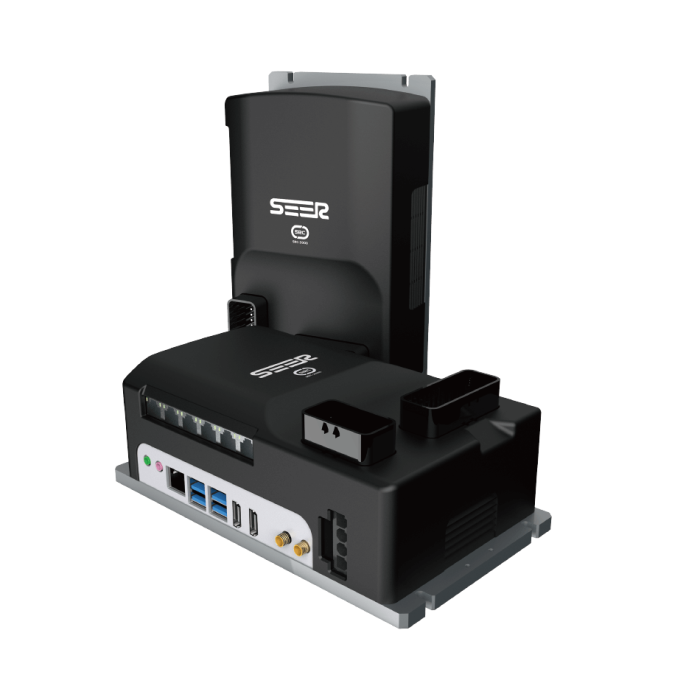
In stock
- BRAND:
- SEER ROBOTICS
- MODEL:
- SRC-2000-I(S)
- PART #:
- SRC-2000-I(S)
- ORIGIN:
- China
- Warranty:
- 12 MONTHS
- AVAILABILITY:
- SUBJECT TO AVAILABILITY
- SKU:
- SEER-Robotics-SRC-2000-I-S
SEER Robotics General-purpose Robot Controller (SRC-2000-I(S))
A mobile robot is only as capable as the single box that has to listen to every sensor, talk to every drive and still decide where to go next. The SEER Robotics General-purpose Robot Controller (SRC-2000-I(S)) is built for exactly that job: one compact unit that gathers navigation, communication and input/output work in one place, so a robot builder does not have to stitch together a collection of separate boards.
This product is available through this page, by quotation.
Background
SEER Robotics and its controller range
SEER Robotics offers a family of robot controllers, and the store groups them under Controllers. The range runs from an entry-level model, the SEER Robotics Entry-level Robot Controller (SRC-880), to safety-oriented units such as the SEER Robotics Safety Robot Controller (SRC-3000FS). The SRC-2000-I(S) sits in the general-purpose part of that family, aimed at builders who want one controller that adapts to many kinds of carrying robots rather than a unit tuned to one machine.
Positioning and key technology
The SRC-2000-I(S) is a general-purpose controller, and its published specifications show what that means in practice. It supports four navigation types: SLAM, QR Code, Laser Reflector and NFL. A builder can therefore choose the method that suits the site, whether that is a free-roaming facility mapped by SLAM or a floor laid out with codes or reflectors.
Around that navigation core sits a broad set of connections: digital inputs and outputs, CAN and RS485 buses, gigabit Ethernet, dual-band Wi-Fi and USB 3.0. The stated navigation accuracy is ±5 mm and ±1°, and the controller handles a single-frame map area of up to 400000 m². Together these figures place it among the controllers meant for demanding indoor mobile robots, which are the kind found in Factory Robots applications.
Technical Specifications
| Specification | Value |
|---|---|
| Weight | 1.41 kg |
| Dimensions (L x W x H) | 225 x 128 x 84 mm |
| Working voltage | 24 V |
| Power consumption | 48 W (excluding DO output current) |
| Power DO | 8-Way (single-loaded 24 V / 2 A; 8-Way total load capacity ≤5 A) |
| DO | 2-Way (400 mA) |
| DI | 11-Way (NPN) |
| CAN | 2-Way |
| RS485 | 3-Way |
| Ethernet | 6+1 Way Gbps (1 is for extended Wi-Fi client) |
| Wi-Fi | Dual-band 2.4G / 5G 802.11ac 1T1X |
| USB3.0 | 4-Way |
| Navigation type | SLAM, QR Code, Laser Reflector, NFL |
| Navigation accuracy | ±5 mm, ±1° |
| Driving speed | ≤2 m/s |
| Map area (single frame) | ≤400000 m² |
| Operating temperature and humidity | TEMP: 0°C to 50°C / RH: 10% to 90%, no compression, no condensation |
| IP rating | IP42 |
| Certifications | CE · Conform to EN 61010-1:2010, CE-EMC (IEC 61326-1) Standards |
Specifications as published by the manufacturer; confirmed against the datasheet at quotation.
The manufacturer has not published the package contents, the processor, the memory and storage, the mounting method or the operating system version; they are confirmed at quotation.
What makes the SRC-2000-I(S) a general-purpose controller?
The word general-purpose is easy to print and harder to earn. Here it rests on the breadth of the interface list. A robot that carries goods rarely needs just one kind of connection. It needs digital inputs for switches and sensors, outputs to switch loads, field buses to reach drives and peripherals, and a network link to talk to the fleet or the warehouse system. The SRC-2000-I(S) provides 11 NPN digital inputs, 2 digital outputs rated at 400 mA, and 8 power outputs that can each carry 2 A at 24 V, with a total load capacity of up to 5 A across all eight.
The communication side is just as wide. Two CAN channels and three RS485 channels cover most drive and sensor buses, while the Ethernet block offers six gigabit ports plus one more reserved for an extended Wi-Fi client. Dual-band 802.11ac Wi-Fi and four USB 3.0 ports add wireless connectivity and room for peripherals.
The second argument is flexibility in navigation. Because the controller supports SLAM, QR Code, Laser Reflector and NFL navigation, the same hardware can serve sites with very different layouts. A builder is not locked into a single way of locating the robot, and the stated accuracy of ±5 mm and ±1° applies to the controller as listed.
How does it compare with the other controllers in the range?
The right choice depends on what the robot must do. For a simpler build, the SRC-880 is described by its name as an entry-level controller. For applications where safety functions come first, the SRC-3000FS is the safety robot controller in the range. The SRC-2000-I(S) is the middle path: a broad interface set and several navigation methods for general carrying robots, without being specialized for one vehicle type.
The listed sibling version, the SRC-2000-F(S), is offered as a specified controller for autonomous forklifts. We do not carry figures for it on this page, so every number above belongs to the SRC-2000-I(S) alone.
Who is the SRC-2000-I(S) for?
The first group is robot manufacturers and integrators who build several types of carrying robot and prefer one controller platform across them. A wide interface list means fewer add-on boards and a shorter path from design to a working prototype.
The second group is engineering teams in logistics and industrial automation who need to move goods inside a building. They benefit from the choice of navigation methods, because a site that starts with reflectors may later move to SLAM without a change of controller.
The third group is research and development teams and system builders who want a documented, standards-conformant unit for their own robot projects. The CE conformity to EN 61010-1:2010 and the CE-EMC statement under IEC 61326-1 help when a project must show that its components meet recognized standards.
If your machine is an autonomous forklift, look at the SEER Robotics Specified Controller for Autonomous Forklift (SRC-2000-F(S)), which is made for that vehicle. For a first, simpler robot, the entry-level model may be enough. Keep in mind the IP42 rating and the 0°C to 50°C operating range: the SRC-2000-I(S) is suited to protected indoor settings rather than wet or very hot ones.
What is the SRC-2000-I(S) used for?
- Autonomous carrying robots: it runs navigation and motion for robots that move loads along set routes or free paths.
- Warehouse and logistics vehicles: its map area of up to 400000 m² in a single frame suits large floor spaces.
- Factory material transport: inputs, outputs and field buses connect the robot to conveyors, doors and other plant equipment.
- Robot prototyping: a broad interface set lets development teams try sensor and drive combinations on one platform.
- Fleet-connected vehicles: gigabit Ethernet and dual-band Wi-Fi link the robot to a wider system.
- Mixed-navigation sites: SLAM, QR Code, Laser Reflector and NFL navigation let one controller serve differing facility layouts.
Pricing and Availability
We do not print prices on this page. A quotation is the way to proceed, and it is shaped around your quantity, your project and your location. Delivery, customs and support are arranged with the quotation. Send us your request and the SRC-2000-I(S) is available on this page.
Frequently Asked Questions
What navigation methods does the SRC-2000-I(S) support?
It supports SLAM, QR Code, Laser Reflector and NFL navigation. The stated navigation accuracy is ±5 mm and ±1°.
What are the power and size of the controller?
It works at 24 V and has a power consumption of 48 W, excluding DO output current. It weighs 1.41 kg and measures 225 x 128 x 84 mm.
Which communication interfaces are available?
It offers 2 CAN channels, 3 RS485 channels, 6+1 gigabit Ethernet ports (1 is for an extended Wi-Fi client), 4 USB 3.0 ports and dual-band 2.4G / 5G 802.11ac Wi-Fi.
What digital inputs and outputs does it have?
There are 11 NPN digital inputs and 2 digital outputs at 400 mA. There are also 8 power outputs, each rated at 24 V / 2 A, with a total load capacity of up to 5 A.
In what conditions can it operate?
The ambient range is 0°C to 50°C with relative humidity of 10% to 90%, without compression or condensation. The IP rating is IP42.
Which standards does it meet?
It carries CE marking and conforms to EN 61010-1:2010 and to the CE-EMC standard IEC 61326-1.
Where can I buy the SRC-2000-I(S) and what does it cost?
It is available through this page by quotation. We do not publish a price; request a quote and we will respond with the terms for your project.
Summary
A robot needs one place where all its sensing, communication and decisions meet, and the SRC-2000-I(S) is designed to be that place. It combines four navigation methods, a wide set of inputs, outputs, buses and network links, and a stated accuracy of ±5 mm and ±1° in a 1.41 kg unit. It suits indoor carrying robots and the teams that build them, while forklift and safety-focused projects may point to other models in the range. For a quotation on the SRC-2000-I(S), this page is the starting point.