
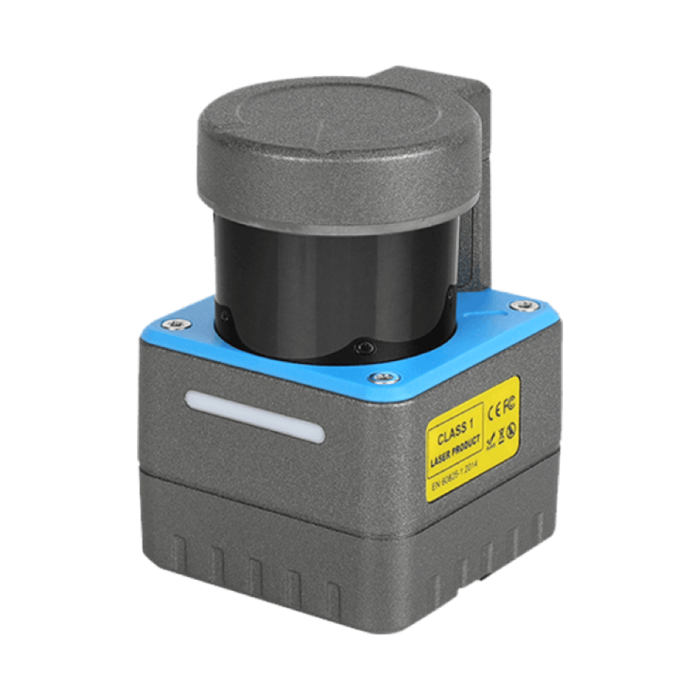
OLEI Laser / Camera (LR-1BS5H)
In stock
- BRAND:
- OLEI
- MODEL:
- LR-1BS5H
- PART #:
- LR-1BS5H
- ORIGIN:
- China
- Warranty:
- 12 MONTHS
- AVAILABILITY:
- SUBJECT TO AVAILABILITY
- SKU:
- SEER-Robotics-OLEI-LR-1BS5H
OLEI Laser / Camera (LR-1BS5H)
Some sensors are chosen for how far they see; others for how cleanly they report what is close. The OLEI Laser / Camera (LR-1BS5H) belongs to the second group, a scanner that sweeps a wide arc and hands the robot tidy, adjustable data to work with.
The product is available through this page, by quotation.
Background
The OLEI LR-1BS5 line
OLEI makes laser scanners for machines that must find their way around people, shelves and walls. The LR-1BS5 line is described by its source as suited to different industries, such as robotics, security and surveillance, industrial automation and smart logistics. The LR-1BS5H is named in that line alongside the LR-1BS5+ and the LR-1BS2.
For buyers comparing the range, the OLEI Laser / Camera (LR-1BS2) is the sibling version to look at. Its figures are not given here, because each version keeps its own.
What the LR-1BS5H is built to do
The LR-1BS5H is suitable for SLAM navigation and point cloud obstacle avoidance strategies. In plain terms, it gives a mobile robot a map of its surroundings and a way to spot what is in its path. Two features shape how it behaves in the field. The first is a weak signal threshold that the user can set, so the strength adjustment can be matched to different usage scenarios. The second is a built-in multi-level filtering algorithm, which the customer can set as needed to deal with tailing problems.
Tailing is the smearing of points that can appear behind an object edge in a scan. Being able to filter it at the sensor means less cleanup further along in the robot's software.
Technical Specifications
| Specification | Value |
|---|---|
| Model | LR-1BS5H |
| Scanning angle | 270 degrees |
| Angular resolution | Fixed 0.225° |
| Horizontal plane error | ±1° |
| Maximum point cloud density | 40k/s (azimuth, distance, reflection intensity and other data) |
| Protection class | IP65 or optional |
| Certifications | FCC, EMC, CE, RoHS, REACH, FDA |
| Weak signal threshold | User-settable strength adjustment |
| Filtering | Built-in multi-level algorithm, customer-settable |
Specifications as published by the manufacturer; confirmed against the datasheet at quotation.
The manufacturer has not published the power consumption, the contents of the box, the operating humidity or the output interface types; they are confirmed at quotation.
What makes the LR-1BS5H suited to SLAM and obstacle avoidance?
Three things work together. The 270-degree scanning angle covers a wide arc around the front and sides of a machine. The fixed 0.225° angular resolution means the spacing between readings stays the same from sweep to sweep, which makes scans easier to compare when a robot is building or following a map. Each point carries azimuth, distance and reflection intensity, at a maximum density of 40k/s.
The horizontal plane error of ±1° is there to protect the horizontal scanning distance. A scanner that tilts out of its plane reads the floor or the ceiling instead of the obstacle, so keeping that error small matters for obstacle avoidance.
How do the adjustable settings help in different sites?
A bright loading dock, a dim aisle and a shiny floor each return light differently. The user-settable weak signal threshold lets the integrator decide how weak a return can be before it is treated as noise. The multi-level filtering, also settable, lets the same sensor be tuned for a busy warehouse or a quieter factory cell. This is a practical advantage for teams that deploy one robot design across several buildings.
Who is the LR-1BS5H for?
Robot builders and integrators are the first group: they need a scanner for SLAM navigation and point cloud obstacle avoidance, with settings they can tune. Operators of logistics robots and factory robots are the second, since the source names smart logistics and industrial automation among its target industries. Security and surveillance teams are the third. Buyers who want to compare a sibling version can review the LR-1BS2 before requesting a quotation.
What is the LR-1BS5H used for?
- SLAM navigation: building and following a map of the robot's surroundings.
- Obstacle avoidance: feeding point cloud data into avoidance strategies.
- Mobile robotics: giving autonomous machines a wide view of the area ahead and to the sides.
- Security and surveillance: scanning an area for objects and movement.
- Industrial automation: sensing in factory cells and along production lines.
- Smart logistics: guiding vehicles through warehouses and distribution sites.
Pricing and Availability
Pricing is by quotation: send us your project details and we will respond with a quote. Delivery, customs and support are arranged with the quotation. The OLEI Laser / Camera (LR-1BS5H) is available on this page.
Frequently Asked Questions
What scanning angle does the LR-1BS5H cover?
It covers 270 degrees with a fixed angular resolution of 0.225°.
What data does it provide?
The point cloud provides azimuth, distance, reflection intensity and other data, at a maximum density of 40k/s.
Can the sensor be tuned for different environments?
Yes. The weak signal threshold strength is user-settable, and the multi-level filtering algorithm can be set by the customer to deal with tailing problems.
What certifications does it carry?
The manufacturer lists FCC, EMC, CE, RoHS, REACH and FDA.
What is its protection class?
The manufacturer states IP65 or optional. The exact configuration is confirmed at quotation.
Is it suitable for SLAM?
Yes. It is described as suitable for SLAM navigation and point cloud obstacle avoidance strategies.
Where can I buy the LR-1BS5H and what does it cost?
It is available through this page, by quotation. Send your requirements and we will prepare a quote for your project.
Summary
The LR-1BS5H is a scanner chosen less for headline range than for clean, tunable data: a 270-degree view, a fixed 0.225° resolution, and settings for weak signals and filtering. For robot builders and integrators in logistics, factory and security work, this page is the starting point.


