
Realman Robotics 6-DOF Ultra-Lightweight Robotic Arm (ECO65-B)
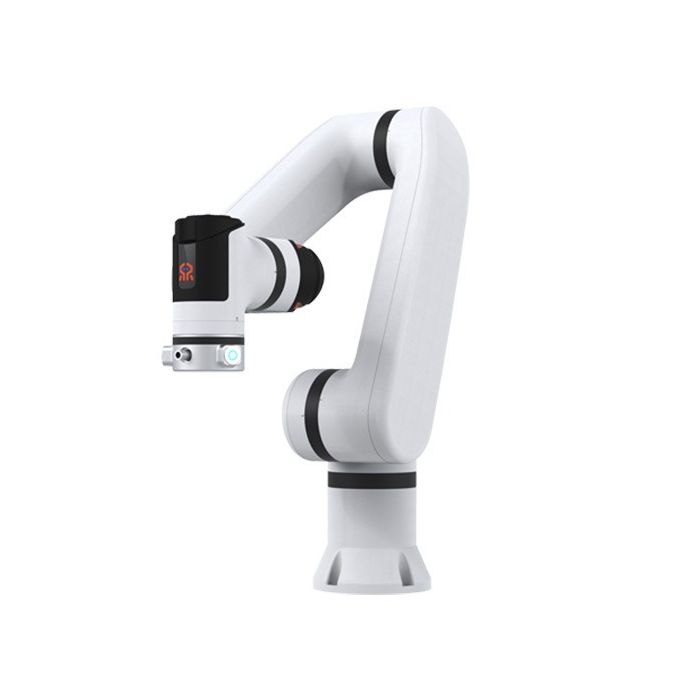
In stock
- BRAND:
- REALMAN
- PART #:
- ECO65-B
- AVAILABILITY:
- SUBJECT TO AVAILABILITY
- SKU:
- Realman Robotics-ECO65-B
Realman Robotics 6-DOF Ultra-Lightweight Robotic Arm (ECO65-B)
Most people picture an industrial robot as something that needs a fenced-off bay and a cabinet the size of a refrigerator. The Realman Robotics 6-DOF Ultra-Lightweight Robotic Arm (ECO65-B) starts from the opposite idea: that a capable arm should fit the bench, the cart or the classroom, and that a small team should be able to put it to work without rebuilding the room around it.
The product is available through this page, by quotation.
Background
The company behind the arm
The ECO65-B is made by RealMan Intelligent Technology (Beijing) Co., Ltd, a robotics manufacturer that concentrates on lightweight robotic arms. The company markets its portfolio under the RealMan and Realman Robotics names, and the arms are aimed at buyers who want a small, approachable machine rather than a heavy industrial installation.
Within the maker's ECO65 family, the ECO65-B is the standard version. Two siblings are named alongside it: the ECO65-6F, the six-axis force version, and the ECO65-6FB. If your work depends on sensing force at the wrist, those names are the ones to raise when you ask for a quotation, so that the right version is matched to your task.
Where the ECO65-B sits in the range
The standard version is the plain entry in its family. It has six degrees of freedom, which is the arrangement most buyers expect from a general-purpose arm: enough joints to place a tool at a point and to approach that point from a chosen direction. For many tasks in laboratories, workshops and teaching rooms, that is the whole requirement, and a simpler arm is easier to learn, easier to place and easier to explain to a new operator.
The arm belongs to the wider class of lightweight collaborative-style arms, which you can browse in our Robot Arms category. Because the maker presents its arms in a human-like, slim form, you may also find related equipment in the Humanoids category, where buyers often compare arm designs for research projects.
Technical Specifications
| Specification | Value |
|---|---|
| Model | ECO65-B (standard version) |
| Degrees of freedom | 6 |
| Joint 1 motion range | -178~+178 ° |
| Joint 1 maximum angular velocity | 180 °/s |
| Operating temperature | 0-45 ℃ |
| Manufacturer | RealMan Intelligent Technology (Beijing) Co., Ltd |
Specifications as published by the manufacturer; confirmed against the datasheet at quotation.
The manufacturer has not published the dimensions drawing, the contents of the packing list, whether a teach pendant is included, the certifications or the noise level; they are confirmed at quotation.
What should I check before choosing the ECO65-B?
Start with the joint figures, because they tell you how the arm will behave at its base. Joint 1 turns through -178~+178 °, so the base can sweep almost a full circle, stopping just short of a complete turn in either direction. For a bench setup, that means you can mount the arm near a wall or a corner and still reach most of the area in front of it, while planning the cable and tool path so the final few degrees are never needed.
The Joint 1 maximum angular velocity is 180 °/s. That figure describes the base joint only, and it is a useful guide to how quickly the arm can swing from one station to another. It is a speed limit for that single joint rather than a statement about the whole arm or the speed at the tool, which depends on the pose, the tool and the program.
Next, look at the environment. The operating temperature is 0-45 ℃. In the Caribbean, an air-conditioned laboratory, classroom or workshop sits comfortably inside that band, while an open-sided shed or a sun-exposed loading area in the afternoon heat may not. Plan the location with that in mind, and ask us if your site is unusual.
Finally, think about the points that remain open. Certifications, the dimensions drawing and the noise level matter to anyone who has to pass a safety review or place a machine in a quiet room. Ask for them with your quotation and keep the answers with your project file.
How does the standard version compare with the force versions?
The ECO65 family names three versions: the ECO65-B, the ECO65-6F and the ECO65-6FB. The 6F name marks the six-axis force version. In plain terms, a force version is intended for work where the arm must feel contact, such as pressing, polishing, inserting or following a surface, rather than simply travelling to a taught point.
The standard ECO65-B is the sensible choice when the task is positional: picking, placing, pointing, demonstrating, teaching a motion sequence or running a repeatable routine. If your application depends on measuring contact force, tell us so at the start, and we will match the right version of the family to it. The figures in the table above belong to the standard version and should not be assumed for the others.
Who is the ECO65-B for?
The first group is education. Universities, technical colleges and secondary schools that teach robotics need an arm students can approach without fear. A six-joint arm built to be light suits a teaching bench, and its joint structure is the same one students will meet in industry, so the lessons carry over.
The second group is research and development. Small laboratories, start-ups and engineering departments often need a flexible arm to test an idea before committing to a production cell. The standard version keeps the entry point simple, and the arm can be moved from one experiment to the next.
The third group is light automation in small businesses. Workshops, packaging operations, food preparation areas and electronics assembly benches can use a compact arm to take over a repetitive hand movement. The aim is not to replace a production line but to relieve one person of one tiring job.
The fourth group is integrators and technology resellers across the islands who need a dependable small arm to build demonstrations or customer pilots. If your project needs force sensing, ask about the ECO65-6F or ECO65-6FB at the same time, and we will help you compare the options. Buyers who are still choosing between formats can look through our Robot Arms category first.
What is the ECO65-B used for?
- Teaching robotics. Gives students a real six-joint arm to program, test and understand on a classroom bench.
- Laboratory research. Supports experiments in motion planning, vision-guided handling and human-robot interaction.
- Pick and place. Moves small items between trays, fixtures or conveyors in a repeatable cycle.
- Demonstrations. Serves as an eye-catching exhibit for trade shows, showrooms and open days.
- Light assembly. Handles simple, repetitive positioning steps at a workbench.
- Prototyping. Lets integrators build and test a workcell concept before a larger investment is made.
Pricing and Availability
Every order for the ECO65-B starts with a quotation, so that the version, the accessories and your site conditions are settled together. Delivery, customs and support are arranged with the quotation. Send us your application and your location, and we will respond with the details. The Realman Robotics 6-DOF Ultra-Lightweight Robotic Arm (ECO65-B) is available on this page.
Frequently Asked Questions
How many degrees of freedom does the ECO65-B have?
The ECO65-B has 6 degrees of freedom. That is the standard arrangement for placing a tool at a point and choosing the direction from which it approaches.
What is the motion range of Joint 1?
Joint 1 moves from -178 to +178 °. That gives the base a very wide sweep, stopping just short of a complete turn in each direction.
How fast can Joint 1 move?
The maximum angular velocity of Joint 1 is 180 °/s. This figure applies to that joint alone.
What temperatures can the arm work in?
The operating temperature is 0-45 ℃. An air-conditioned room is the safest place for it in warm climates.
Is a teach pendant included?
Ask us when you request your quotation, and we will answer for your order. Please state it in your request if you need one.
What is the difference between the ECO65-B and the force versions?
The ECO65-B is the standard version, while the ECO65-6F is the six-axis force version, and the ECO65-6FB is also part of the family. Tell us if your task depends on sensing contact force, and we will recommend the best version.
Where can I buy the ECO65-B and what does it cost?
You can request it through this page. The cost depends on the version and your delivery location, so it is given in a written quotation rather than printed here.
Summary
The ECO65-B answers a simple question: how much arm do you actually need on the bench? It gives you six degrees of freedom, a base joint that sweeps from -178 to +178 ° at up to 180 °/s, and an operating range of 0-45 ℃, all from a maker, RealMan Intelligent Technology (Beijing) Co., Ltd, that focuses on lightweight arms. It suits classrooms, laboratories and small workshops that want a capable machine without a heavy installation. To discuss your project and receive a quotation, this page is the starting point.