
PUDU T300 Standard Industrial Delivery Robot
In stock
- BRAND:
- PUDU ROBOTICS
- MODEL:
- T300 STANDARD
- ORIGIN:
- China
- AVAILABILITY:
- SUBJECT TO AVAILABILITY
- SKU:
- PUDU-T300-Standard
PUDU T300 Standard Industrial Delivery Robot
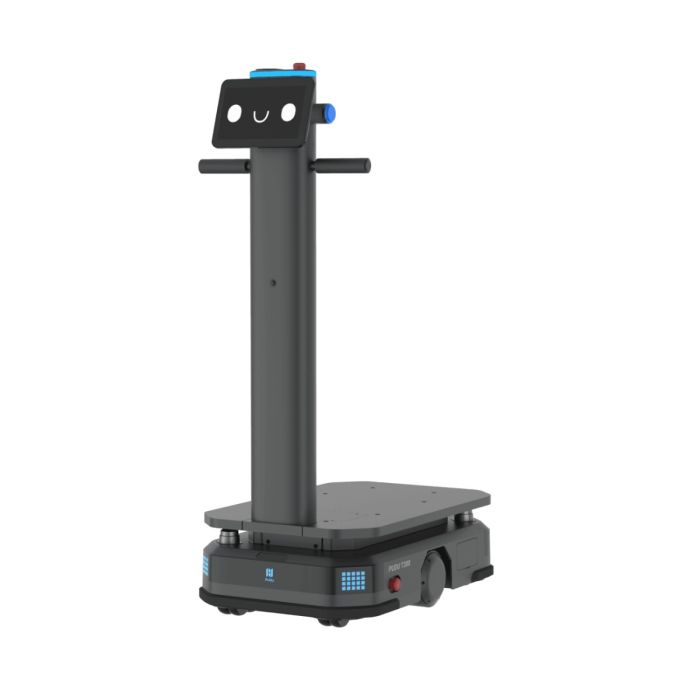
Anyone can print a big payload figure on a brochure. A delivery robot earns its place in the doorways, over the thresholds and through the corridors that lie between the loading point and the drop-off. The PUDU T300 Standard Industrial Delivery Robot is built around that idea: a high-strength load-bearing chassis that carries heavy goods and still has the manners to share a building with people.
The PUDU T300 Standard Industrial Delivery Robot is available through this page, by quotation.
Background
Pudu Robotics and its first industrial robot
Pudu Robotics is best known for service robots that work in restaurants, hotels and cleaning routines. The PUDU T300 marks a change of direction: it is the company's first robot designed expressly for industrial applications. It was announced to make its debut at Hannover Messe 2024, one of the main industrial technology shows, which tells you the audience the maker had in mind: factories, workshops and logistics operations rather than dining rooms.
The Standard version, listed under the code WTID01, is the base model of the T300 family. A second version, the PUDU T300 Lifting (WTIDL1), adds lifting functionality, and that version is heavier. The sources give its weight as approximately 81 kg (178.5 lbs), against 65 kg (143.3 lbs) for the Standard.
Positioning and key technology
The T300 Standard is a transport robot for industrial material handling and high-load commercial delivery. Its chassis is built for strength, and the manufacturer describes it as offering strong openness and scalability. An interactive touchscreen, listed as 10.1 inches, sits on the machine so that staff can work with it directly.
Safety follows the ISO 3691-4 standard. The robot carries LiDAR sensors, depth cameras, collision protection sensors and emergency stop buttons. For power, it offers both automatic recharging and battery replacement, so a site can plan for round-the-clock service instead of working around a charging break.
Integration is the other half of the story. The T300 comes with IoT capabilities: elevator and e-gate control, app-based and pager calling, and API interfaces for system integration. It also has a self-organized network through which it can dispatch up to 20 robots simultaneously. A single machine can start work on its own, and a larger fleet is possible later.
Technical Specifications
| Specification | PUDU T300 Standard |
|---|---|
| Maximum payload | 661 lbs (300 kg) |
| Machine weight | 65 kg (143.3 lbs) |
| Machine dimensions | 83.5 cm x 50 cm x 135 cm (32.8 in x 19.6 in x 53.1 in) |
| Run-time | 12h (unloaded), 6h (loaded) |
| Battery capacity | 30Ah |
| Charging time | 2h (from 0% to 90%) |
| Cruise speed | Maximum 1.2m/s |
| Threshold crossing height | Maximum 20 mm (0.78in) |
| Groove crossing width | Maximum 35 mm (1.37 in) |
| Path clearance | Minimum 60cm (23.6 in) |
| Touchscreen | 10.1-inch |
| Safety standard | ISO 3691-4 |
| Multi-robot scheduling | Up to 20 robots simultaneously |
Specifications as published by the manufacturer; confirmed against the datasheet at quotation.
The manufacturer has not published the ingress protection rating, the complete in-box contents, the wireless connectivity standards, the noise level or the sensor model details; they are confirmed at quotation.
What makes the T300 Standard different from a forklift or a manual cart?
A forklift needs an operator, a clear floor and wide aisles. A manual cart needs a person to push it, and people cost time. The T300 Standard sits between the two. It carries up to 661 lbs (300 kg), which covers a great many daily loads, and it needs a path clearance of only 60 cm (23.6 in), so it can use corridors that a larger vehicle would not.
Buildings are full of small obstacles. The robot can cross a threshold up to 20 mm (0.78in) high and a groove up to 35 mm (1.37 in) wide, which suits the door sills and floor joints common in industrial and commercial premises. Its cruise speed is a maximum of 1.2m/s, a pace set for working beside people rather than for racing them.
Run-time is stated for both conditions: 12h unloaded and 6h loaded. The 30Ah battery charges from 0% to 90% in 2h. Automatic recharging and battery replacement are both available, which gives a site a choice of how to keep the robot working through a long shift pattern.
Does the T300 Standard work across floors and secured areas?
Yes, and this is where it differs most from a basic carrier. The manufacturer states that the T300 supports elevator access, gate or turnstile integration and remote call functions, which enables operation across separate spaces. Elevator and e-gate control, app-based and pager calling, and API interfaces are part of its IoT capabilities. In practice that means a delivery can start at one end of a site and finish in another area, behind a controlled entrance or on a different level, without a person walking beside the robot.
Planning such a site is a matter of integration: the lifts, gates and software that the robot will talk to. Those details are settled when the project is quoted.
Who is the PUDU T300 Standard for?
Manufacturers with several workstations will find it useful for moving totes, parts and supplies between points on repeated routes. Warehouse and logistics teams can use it for short internal transfers that otherwise tie up staff. Large commercial buildings with back-of-house areas, such as hotels, hospitals and campuses, can use it for heavy supplies that travel through lifts and secured doors.
It also suits operators who want to start with one robot and grow, because a single network can dispatch up to 20 robots. Teams that want a lifting function should look at the T300 Lifting version, which the manufacturer lists as a separate model. If your loads are lighter, the PUDU T150 Light-Payload Industrial Delivery Robot may be worth comparing. If your loads are heavier, look at the PUDU T600 Heavy-Payload Industrial Delivery Robot. For pallet work, the PUDU MP2000 AI-Native Pallet Handling Robot is the related option. More machines of this kind are listed under Industrial Robots and Factory Robots.
What is the PUDU T300 Standard used for?
- Line-side material supply. Carries parts and totes to workstations on a fixed route, so operators stay at their posts.
- Warehouse internal transfers. Moves goods between zones in place of a person with a cart.
- Cross-floor deliveries. Uses elevator control to carry supplies between levels without an escort.
- Access-controlled routes. Passes gates and turnstiles through e-gate integration.
- On-demand calling. Staff summon the robot through an app or a pager when a load is ready.
- Round-the-clock shifts. Automatic recharging and battery replacement keep it working through long operating hours.
Pricing and Availability
Every project is different, so the PUDU T300 Standard is quoted individually. Please send us your site details, the loads to be moved and the systems it must connect to, and we will respond with a quotation. Delivery, customs and support are arranged with the quotation. The PUDU T300 Standard Industrial Delivery Robot is available on this page.
Frequently Asked Questions
How much can the PUDU T300 Standard carry?
Its maximum payload is 661 lbs (300 kg).
How long does it run on one charge?
Run-time is 12h unloaded and 6h loaded. The battery capacity is 30Ah.
How quickly does it recharge?
Charging takes 2h from 0% to 90%. Automatic recharging and battery replacement options are both available.
Can it use elevators and gates?
Yes. It supports elevator access, gate or turnstile integration and remote call functions, with elevator and e-gate control among its IoT capabilities.
What safety standard does it follow?
It is compliant with ISO 3691-4. It carries LiDAR sensors, depth cameras, collision protection sensors and emergency stop buttons.
What is the difference between the Standard and Lifting versions?
The T300 Lifting (WTIDL1) adds lifting functionality and weighs approximately 81 kg (178.5 lbs), while the Standard (WTID01) weighs 65 kg (143.3 lbs).
Where can I buy the PUDU T300 Standard and what does it cost?
It is available through this page, by quotation. We do not list a price here; send us your requirements and we will prepare a quotation.
Summary
The T300 Standard is a heavy-duty carrier that is meant to cope with the doors, sills and narrow corridors where payload figures are tested. It carries 661 lbs (300 kg), crosses a 20 mm (0.78in) threshold, fits a 60 cm (23.6 in) path and connects to elevators and gates. If your site needs that kind of dependable internal transport, this page is the starting point.


