
Noetix Xiaonuo Hobbs 3 Bionic Humanoid Robot
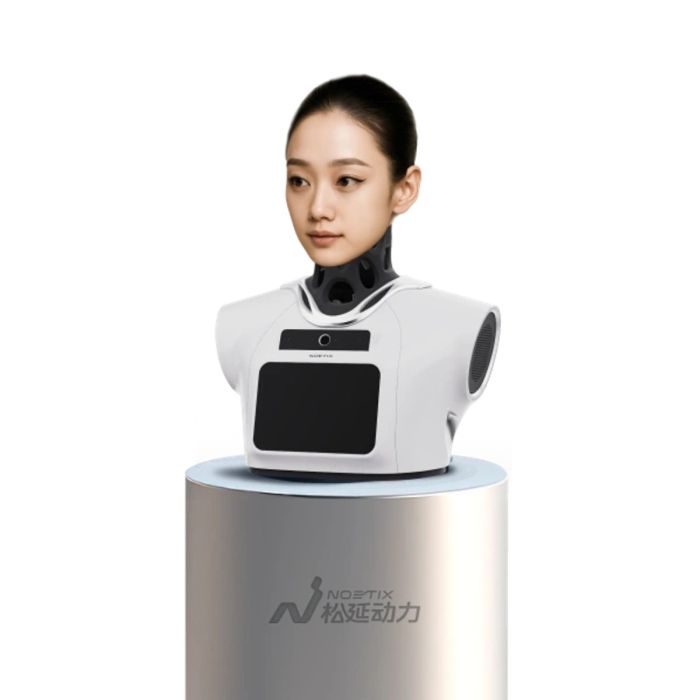
In stock
- BRAND:
- NOETIX
- MODEL:
- Xiaonuo / Hobbs 3
- PART #:
- Hobbs 3
- ORIGIN:
- China
- Warranty:
- 12 MONTHS
- AVAILABILITY:
- SUBJECT TO AVAILABILITY
- SKU:
- Noetix-Xiaonuo-Hobbs3
Noetix Xiaonuo Hobbs 3 Bionic Humanoid Robot
A screen can answer a question, but it cannot look back at you. The Noetix Xiaonuo Hobbs 3 Bionic Humanoid Robot belongs to the class of machines built to close that gap, putting a physical, human-shaped presence in front of the people it serves. For teams that have outgrown the tablet on a stand, this is the kind of platform they come to evaluate.
The product is available through this page, by quotation.
Background
Noetix and the bionic humanoid line
NOETIX is the brand behind a family of humanoid robots that spans compact educational models, wheeled humanoids and bionic interaction robots. The Xiaonuo Hobbs 3 sits in the bionic group, the part of the range that concerns itself with how a robot meets people rather than how it carries loads. Neighboring products in the same family include the Noetix HOBBS W1 Wheeled Humanoid Bionic Robot, and buyers who want to see the wider field can browse the Bionic Humanoids category.
Bionic humanoids have a long lineage in research labs and in public venues such as museums, trade shows and visitor centers. Their appeal is simple: people read faces and gestures faster than they read menus. A robot that occupies space the way a person does invites questions, holds attention and makes a demonstration memorable in a way that a display panel rarely does.
Positioning and key technology
The Xiaonuo Hobbs 3 comes as the Hobbs 3 (Standard) version. Its hardware centers on an 8-core processor rated at 6 TOPS, a 7-inch HD screen, two USB-A 3.0 ports, and software support through an SDK and over-the-air updates. Taken together, that is a platform meant to be programmed, extended and kept current, not a sealed appliance with fixed behavior.
The SDK matters most to the research and integration buyer. It means the robot can be given new behavior by the people who own it, whether that is a custom dialogue flow for a reception desk or an experiment in embodied AI. The over-the-air update function means those changes, and any software improvements, can reach the robot without a technician opening it up. The two USB-A 3.0 ports leave room to attach peripherals during development or on site.
Technical Specifications
| Specification | Hobbs 3 (Standard) |
|---|---|
| Weight | 10.4 kg |
| Basic computing | 8-core, 6 TOPS |
| Screen | 7-inch HD |
| USB-A ports | 3.0 ×2 |
| SDK | Supported |
| Software upgrade (OTA) | Supported |
Specifications as published by the manufacturer; confirmed against the datasheet at quotation.
The manufacturer has not published the battery capacity, the battery runtime, the IP rating, the box contents, the operating temperature, the noise level or the power consumption; they are confirmed at quotation.
What makes a bionic humanoid different from a service screen or a wheeled robot?
The first difference is presence. A kiosk or a tablet is something a visitor operates. A bionic humanoid is something a visitor talks to. That changes how people behave around it: they slow down, they look, they ask follow-up questions. For an exhibition stand, a showroom or a hospitality lobby, that change in behavior is the entire reason to deploy a robot instead of a display.
The second difference is what the machine is optimized for. Wheeled and legged platforms are judged on mobility, payload and endurance. A bionic interaction robot is judged on how well it takes part in a conversation. The Xiaonuo Hobbs 3 carries an 8-core, 6 TOPS computing unit and a 7-inch HD screen, which points to a platform where processing, display and software are the main story. At 10.4 kg, it is a unit a small team can plan around when moving it between locations.
The third difference is openness. Because the SDK is supported, the robot is not limited to whatever behavior ships in the box. A university group can write its own interaction studies, an integrator can connect it to a venue’s own systems, and a developer can prototype a character. Buyers who prefer a different body style can compare it with the Upper Body Humanoids category, where the emphasis shifts toward manipulation and work at a bench.
Can the robot be updated and developed after purchase?
Yes, on two points. The SDK is supported, and software upgrades over the air are supported. In practice this means a purchase is the start of a development path rather than the end of one. New software can be delivered remotely, and custom applications can be built by the owner.
For an organization that has to justify a robot over several seasons of use, that is significant. Exhibition content changes, research questions change, and a reception script written for one year’s event will not fit the next. A platform that can be re-programmed and updated stays useful longer than one whose behavior is fixed at the factory. The two USB-A 3.0 ports add a physical route for peripherals and for development work at the bench.
Details of the SDK itself, such as the programming languages and the interfaces it exposes, are best raised when you request a quotation, so that your developers can check the fit before committing.
Who is the Noetix Xiaonuo Hobbs 3 for?
Research laboratories and universities. Groups working on human-robot interaction, social robotics and embodied AI need a physical subject and a way to program it. A supported SDK and a capable processor make the Hobbs 3 a reasonable candidate for that work.
Exhibition, museum and event organizers. A human-shaped robot draws a crowd. Where the goal is to hold attention and start conversations, a robot with its own display and programmable behavior gives the organizer something to build a show around.
Developers and system integrators. Teams that build interactive installations for clients can use the SDK and the USB-A ports to connect the robot to the rest of a venue’s technology, and the OTA function to keep deployed units current.
Hospitality, retail and reception teams. Organizations testing a front-of-house robot can try it as a greeter or guide; bring your battery and environmental questions with your quotation request.
Buyers whose priority is mobility rather than interaction may prefer the Noetix HOBBS W1 Wheeled Humanoid Bionic Robot, which belongs to the same family but is built on a different body concept.
What is the Noetix Xiaonuo Hobbs 3 used for?
- Reception and greeting. A visible, human-shaped host that welcomes visitors and answers common questions at an entrance or a desk.
- Exhibitions and trade shows. A stand attraction that draws visitors and carries a scripted or interactive presentation.
- Human-robot interaction research. A physical platform for studies of how people respond to a robot that faces them and speaks with them.
- Embodied AI development. A body for testing dialogue, perception and behavior software through the supported SDK.
- Education and demonstration. A classroom or lab showpiece that makes robotics and AI tangible for students and visitors.
- Custom interactive installations. A programmable character that integrators can adapt to a venue, a brand or a themed experience.
Pricing and Availability
We do not show prices on this page. Quotation is the way to buy: tell us the version you need, the quantity and where the robot will be used, and we respond with an offer built for your project. Delivery, customs and support are arranged together with the quotation, so that nothing is left to chase after the order is placed. The Noetix Xiaonuo Hobbs 3 Bionic Humanoid Robot is available on this page.
Frequently Asked Questions
What processor and screen does the Hobbs 3 (Standard) have?
It has 8-core, 6 TOPS computing and a 7-inch HD screen.
How much does the robot weigh?
The Hobbs 3 (Standard) weighs 10.4 kg.
Can I write my own software for it?
Yes. The SDK is supported, so developers can build their own applications and behavior for the robot.
Does it receive software updates?
Yes. Over-the-air software upgrades are supported, so updates can reach the robot without opening it.
What ports does it have?
It has two USB-A 3.0 ports. For any other connection you need, ask when you request a quotation.
What about battery life and the IP rating?
Those figures are not in the specification table above. Ask for them with your quotation request, before you plan a deployment.
Where can I buy the Noetix Xiaonuo Hobbs 3 and what does it cost?
You can buy it through this page by requesting a quotation. We do not show a price here; the offer, including delivery, customs and support, is prepared for your order.
Summary
The screen on a stand can display an answer, yet it cannot meet a visitor’s eyes. The Noetix Xiaonuo Hobbs 3 is built for the places where that difference matters: reception areas, exhibitions, research labs and interactive installations. Its hardware is an 8-core, 6 TOPS processor, a 7-inch HD screen, two USB-A 3.0 ports and a weight of 10.4 kg, backed by a supported SDK and over-the-air updates that keep the platform open to new work. If a human-shaped robot belongs in your plans, this page is the starting point.


