
Noetix N2 EDU Athlete Intelligence Humanoid Robot
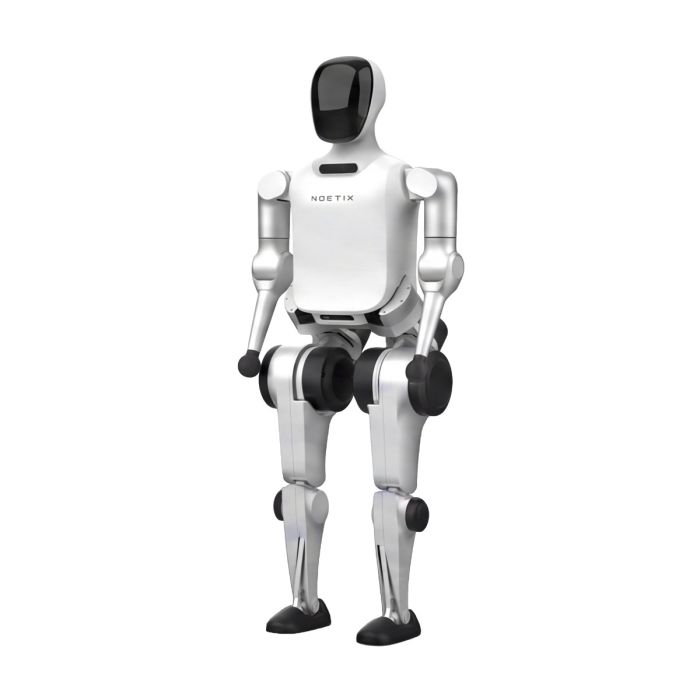
In stock
- BRAND:
- NOETIX
- MODEL:
- N2 EDU
- PART #:
- E1
- ORIGIN:
- China
- AVAILABILITY:
- SUBJECT TO AVAILABILITY
- SKU:
- Noetix-N2-EDU
Noetix N2 EDU Athlete Intelligence Humanoid Robot
Most humanoid robots ask a classroom to make room for a machine built for a factory. The Noetix N2 EDU Athlete Intelligence Humanoid Robot turns that around: it is child-sized, built to walk like a person, and open enough that students and engineers can get into its software. For schools, labs and training centers around the Caribbean, that combination is the point.
The Noetix N2 EDU Athlete Intelligence Humanoid Robot is available through this page, by quotation.
Background
Noetix Robotics and its lineage
The N2 was developed by Noetix Robotics, a company based in Beijing and founded in September 2023. In a short time the company has built a family of humanoid platforms aimed at education, research and applied development. You will find several of them in our store, including the Noetix N2 Athlete Universal Humanoid Robot, the E1 line and the BUMI line.
The N2 sits in the athletic, walking-focused part of that family. Its design is about balanced, human-like locomotion in a body small enough to work around people in an ordinary room.
Positioning and key technology
The N2 is a pioneering child-sized humanoid. It measures 118 cm x 47 cm x 29 cm and weighs 30 kg, a size suited to safe household use. A smaller frame means a classroom or lab can run it without special lifting gear or a large cleared floor.
The architecture centers on 18 degrees of freedom: 4 per arm, 8 in total, and 5 per leg, 10 in total. The joints are driven by 48V DC geared motors with encoders, and the robot uses a pure electric drive for precise control. Peak knee joint torque is 150 N·m.
On the intelligence side, deep reinforcement learning algorithms generate anthropomorphic walking gaits. Speech and visual interaction are powered by a large language model. The control stack runs on an open Linux OS with Python, C++ and ROS compatibility, so teams can use the tools they already know.
The standard compute is a Rockchip RK3588s 8-core processor delivering 6 TOPS of edge compute. The EDU edition can be upgraded to 67 TOPS with an optional NVIDIA Jetson Orin Nano Super, including 4+32GB/8GB memory.
Technical Specifications
| Specification | Value |
|---|---|
| Product | Noetix N2 EDU Athlete Intelligence Humanoid Robot |
| Manufacturer | Noetix Robotics, Beijing |
| Dimensions (N2 series) | 118 cm x 47 cm x 29 cm |
| Weight (N2 series) | 30 kg |
| Degrees of freedom | 18 (4 per arm, 8 total; 5 per leg, 10 total) |
| Drive | 48V DC geared motors with encoders, pure electric drive |
| Peak knee joint torque | 150 N·m |
| Processor | Rockchip RK3588s 8-core |
| Edge compute, standard | 6 TOPS |
| Edge compute, EDU with optional NVIDIA Jetson Orin Nano Super | Up to 67 TOPS, 4+32GB/8GB memory |
| Payload | About 5 kg continuous-walking carrying capacity |
| Software | Open Linux OS, Python/C++, ROS compatible |
| AI and interaction | Deep reinforcement learning gaits; LLM-powered speech and visual interaction |
Specifications as published by the manufacturer; confirmed against the datasheet at quotation.
The manufacturer has not published the weight of the EDU configuration specifically, the box contents, the IP rating, the charging time, Wi-Fi and Bluetooth support, the official maximum running speed or the operating temperature range; they are confirmed at quotation.
What does the EDU edition add to the standard N2?
The body is shared across the N2 series: the same size, the same 18 degrees of freedom, the same motors and the same open software stack. The difference is in compute. The standard robot runs on the Rockchip RK3588s with 6 TOPS of edge compute. The EDU edition offers an optional NVIDIA Jetson Orin Nano Super that raises this to 67 TOPS, with 4+32GB/8GB memory.
That gap matters when a lab wants to run perception models, speech and visual interaction, or its own learning experiments on the robot itself rather than on a separate computer. A student project that runs comfortably at 6 TOPS may be tight at the level a research group needs. The EDU route leaves room to grow without changing the robot.
The Jetson is an option, so state in your request whether you want it included.
How does the N2 EDU compare with other humanoids in the range?
The N2 is built around walking. Its leg joints, its 150 N·m of peak knee torque and its reinforcement-learning gaits all point toward locomotion research and demonstration. If your priority is a walking platform with a human-like gait, this is the family to start with. Our Bipedal Humanoids category shows the wider choice, and the Noetix N2 Athlete Universal Humanoid Robot is the closest sibling for buyers who do not need the EDU edition.
Other lines in the store put the weight on other things, such as upper-body interaction or a smaller footprint. We are glad to talk through which one fits your plan before you decide.
Who is the Noetix N2 EDU for?
Universities and technical colleges are the clearest fit. A child-sized humanoid with open Linux, Python, C++ and ROS support lets students work on gait control, balance and human-robot interaction using standard tools. The 67 TOPS option gives research groups the compute to go further. Our Research Robots category lists related platforms.
Secondary schools and training centers can use it to make robotics visible, teaching programming and engineering with a machine that walks and speaks. Innovation labs, science museums and exhibition teams will find that a walking humanoid draws a crowd and holds attention. Integrators and developers building embodied-intelligence applications can also use the open stack as a development base.
If you need a standard configuration without the compute upgrade, the Noetix N2 Athlete Universal Humanoid Robot may suit you better.
What is the Noetix N2 EDU used for?
- Locomotion research. Test and refine reinforcement-learning walking gaits on a real biped with 10 leg degrees of freedom.
- Classroom robotics. Teach programming, control and mechatronics in Python or C++ on a robot students can see and work with.
- ROS development. Build and test navigation, perception and manipulation software using the ROS compatibility of the open Linux system.
- Human-robot interaction. Explore speech and visual interaction powered by a large language model.
- Edge AI experiments. Run onboard models on the standard 6 TOPS processor or on the optional 67 TOPS Jetson upgrade.
- Demonstrations and outreach. Show visitors, students and clients what embodied intelligence looks like in practice.
Pricing and Availability
We do not list prices on this page. Send us a quotation request that states your configuration, including whether you want the optional NVIDIA Jetson Orin Nano Super, and the number of units. Delivery, customs and support are arranged with the quotation, so you know what to expect before you commit. The Noetix N2 EDU Athlete Intelligence Humanoid Robot is available on this page.
Frequently Asked Questions
How tall is the Noetix N2 EDU?
The N2 series measures 118 cm x 47 cm x 29 cm and weighs 30 kg. It is a child-sized humanoid.
How many degrees of freedom does it have?
It has 18 in total: 4 per arm, 8 in all, and 5 per leg, 10 in all.
What processor does it use?
The standard compute is a Rockchip RK3588s 8-core processor with 6 TOPS. The EDU edition can be upgraded to 67 TOPS with an optional NVIDIA Jetson Orin Nano Super.
Can I program it in Python or C++?
Yes. The control stack runs on an open Linux OS with Python, C++ and ROS compatibility.
How much can it carry?
It has about 5 kg of continuous-walking carrying capacity.
Is the Noetix N2 EDU suitable for teaching?
Yes. Its child-sized body, open Linux software and Python, C++ and ROS support make it a practical platform for classrooms, labs and training centers.
Where can I buy the Noetix N2 EDU and what does it cost?
You can request it through this page, by quotation. We do not print prices; the quotation states the terms for your configuration and quantity.
Summary
The N2 EDU makes a humanoid practical for the places that teach and test. It is child-sized, built for walking, driven by 18 degrees of freedom and open to the languages and tools developers already use. The EDU edition adds a route up to 67 TOPS of onboard compute for heavier AI work. If a walking humanoid belongs in your classroom or lab, this page is the starting point.


