
Kepler Humanoid Robot (Humanoid Robot)
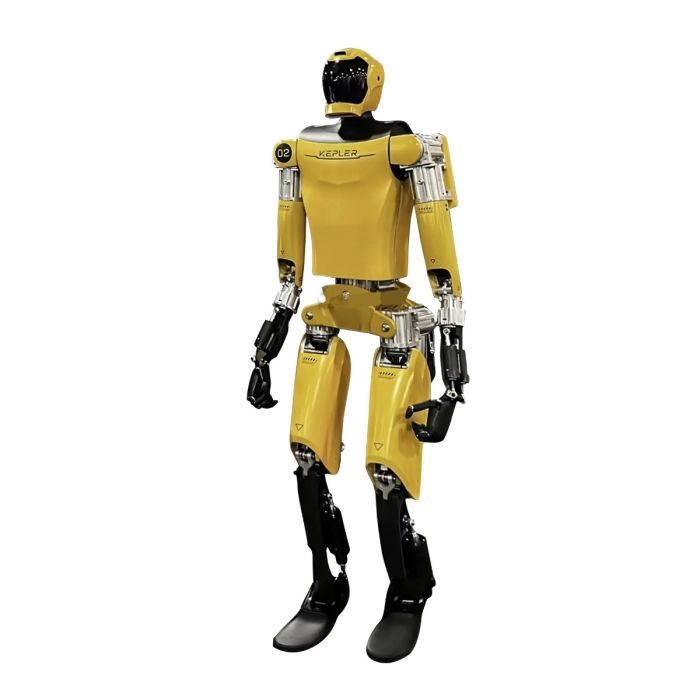
In stock
- BRAND:
- KEPLER
- PART #:
- Humanoid Robot
- ORIGIN:
- China
- AVAILABILITY:
- SUBJECT TO AVAILABILITY
- SKU:
- Kepler-Humanoid-Robot
Kepler Humanoid Robot (Humanoid Robot)
Most humanoid robots are built to be watched. The Kepler Humanoid Robot (Humanoid Robot) is built to be put to work: lifting, carrying and handling parts in factories and warehouses, shift after shift. For Caribbean organizations weighing automation against a small, hard-to-hire workforce, that difference matters more than any stage demonstration.
The Kepler Humanoid Robot (Humanoid Robot) is available through this page, by quotation.
Background
Kepler and its in-house approach
Kepler is a Shanghai, China-based company. It has presented live demonstrations of its robot's operational capabilities to an audience of researchers, executives and engineers from across the global robotics ecosystem. Over 80% of its robot's core hardware is developed and manufactured in-house. This supports vertical integration, reduces costs and improves supply chain resilience.
For a buyer, vertical integration is more than a talking point. A robot is only useful if it can be built, serviced and supported over years. A maker that controls most of its core hardware is better placed to keep that chain steady than one that assembles purchased modules.
Positioning and key technology
The K2 Bumblebee is purpose-built for industrial settings. It stands 175 cm (68.9 in.) tall and weighs 75 kg (165.3 lb.). It has 52 degrees of freedom and more than 80 integrated sensors. Its onboard compute reaches 100 TOPS (trillions of operations per second), which lets it autonomously execute task sequences in structured operational environments.
The motion system rests on Kepler's proprietary planetary roller screw actuators, engineered for smooth motion control and reduced energy draw. Combined with a series-parallel architecture, this actuation supports payloads of 15 kg (33.1 lb.) per arm and up to 30 kg (66.1 lb.) with both arms. An integrated rotary mechanism and AI algorithms deliver 0.01-degree positioning accuracy and millimeter-level precision.
The hands are a feature in their own right. Each Dexterous Hand has 11 degrees of freedom, 25 force-sensing contact points per finger and a six-axis force/torque sensor at the wrist. Together they give the robot the sense of touch that fine handling needs.
Technical Specifications
| Specification | Value |
|---|---|
| Height | 175 cm (68.9 in.) |
| Weight | 75 kg (165.3 lb.) |
| Degrees of freedom | 52 |
| Integrated sensors | More than 80 |
| Onboard compute | 100 TOPS |
| Actuators | Proprietary planetary roller screw actuators |
| Payload | 15 kg (33.1 lb.) per arm; up to 30 kg (66.1 lb.) with both arms |
| Runtime | Up to eight hours of operational time on a single one-hour charge |
| Precision | Millimeter-level (0.04 in) for fine motor tasks |
| Positioning accuracy | 0.01 degree |
| Hands | 11 degrees of freedom each; 25 force-sensing contact points per finger; six-axis force/torque sensor at the wrist |
| Configurations | Bipedal Basic, Bipedal Developer, Wheeled Developer |
Specifications as published by the manufacturer; confirmed against the datasheet at quotation.
The manufacturer has not published the walking speed, the battery capacity, the IP rating, the operating temperature, the connectivity, the operating system, the package contents or a charging time specification sheet; they are confirmed at quotation.
What makes the Kepler Humanoid Robot different from a research-only humanoid?
Many humanoids on the market are designed first to demonstrate walking or balance. This one is described from the start as an industrial machine. The figures show it: a payload of 15 kg (33.1 lb.) per arm, up to 30 kg (66.1 lb.) with both arms, and up to eight hours of operational time on a single one-hour charge. Those numbers describe a robot meant to work a shift, not to perform for a few minutes.
The second difference is touch. With 25 force-sensing contact points per finger and a six-axis force/torque sensor at each wrist, the hands can feel what they hold. That is what separates a robot that can pick up a box from one that can handle a part with millimeter-level precision.
The third difference is the supply side. With over 80% of core hardware developed and manufactured in-house, the maker has a direct hand in cost and in continuity. A buyer planning a multi-year deployment can weigh that alongside the technical figures.
Which configuration should I choose?
The product lineup features three configurations: Bipedal Basic, Bipedal Developer and Wheeled Developer. The specification table above describes the robot in general and not any one configuration. Tell us which configuration you want and we will prepare the quotation for it.
As a starting point, a bipedal form suits work in spaces built for people, while a wheeled base is a natural question for flat, open floors such as warehouses. You can compare the wider field on our Bipedal Humanoids page.
Who is the Kepler Humanoid Robot for?
Kepler has named its primary markets: intelligent manufacturing, warehousing and logistics, niche industries, academic research, and education. Each of these calls for a different conversation.
Manufacturers and logistics operators are the clearest fit. They have repeatable tasks in structured environments, and they need a machine that can lift, carry and place with consistency. The onboard compute is meant for exactly this: executing task sequences autonomously.
Universities, technical institutes and research groups form a second segment. A platform with 52 degrees of freedom, more than 80 sensors and sensorized hands gives researchers real hardware for manipulation and embodied AI work. The Developer configurations are named with this kind of user in mind.
Educators and training centers form the third. A full-size humanoid in the classroom shows students how perception, control and mechanics come together. Organizations still exploring the field can browse the wider Humanoids category before deciding.
What is the Kepler Humanoid Robot used for?
- Factory part handling. Moving and placing components in intelligent manufacturing, where the hands' millimeter-level precision counts.
- Two-armed carrying. Lifting loads of up to 30 kg (66.1 lb.) with both arms, or 15 kg (33.1 lb.) with each arm separately.
- Warehouse and logistics tasks. Running task sequences in structured environments, supported by the onboard compute of 100 TOPS.
- Fine motor work. Delicate manipulation using the force-sensing fingers and the six-axis wrist sensor.
- Academic research. A full-size platform for studying manipulation, control and embodied AI.
- Education and training. A working humanoid for teaching robotics, sensing and automation.
Pricing and Availability
Pricing is prepared as a quotation for your project and configuration. Delivery, customs and support are arranged with the quotation, so there is nothing to work out on your own. Send us your application, your preferred configuration and your location, and we will respond with the details. The Kepler Humanoid Robot (Humanoid Robot) is available on this page.
Frequently Asked Questions
How tall is the robot and how much does it weigh?
It is 175 cm (68.9 in.) tall and weighs 75 kg (165.3 lb.).
What can it carry?
The payload is 15 kg (33.1 lb.) per arm and up to 30 kg (66.1 lb.) with both arms.
How long does it run between charges?
It delivers up to eight hours of operational time on a single one-hour charge.
How precise is it?
The robot achieves 0.01-degree positioning accuracy and millimeter-level (0.04 in) precision for fine motor tasks.
What are the hands like?
Each Dexterous Hand has 11 degrees of freedom and 25 force-sensing contact points per finger. A six-axis force/torque sensor sits at the wrist.
Which configurations are available?
The lineup has three configurations: Bipedal Basic, Bipedal Developer and Wheeled Developer. Tell us about your site and your work, and we will suggest which one suits you.
Where can I buy the Kepler Humanoid Robot and what does it cost?
You can buy it through this page, by quotation. The cost depends on the configuration and the delivery to your location, so we provide it in the quotation and not as a fixed figure.
Summary
The Kepler Humanoid Robot (Humanoid Robot) is a humanoid made for work and not for show. It combines a 175 cm (68.9 in.) frame, 52 degrees of freedom, more than 80 sensors, 100 TOPS of onboard compute, a two-arm payload of up to 30 kg (66.1 lb.) and hands that can feel what they hold. It is backed by a maker that builds over 80% of its core hardware in-house. For manufacturing, logistics, research and education teams in the Caribbean who want a humanoid that earns its place, this page is the starting point.
Specifications
General
What's included
Related Products
Out of stock


