
Kepler Robotics K1 Humanoid Robot
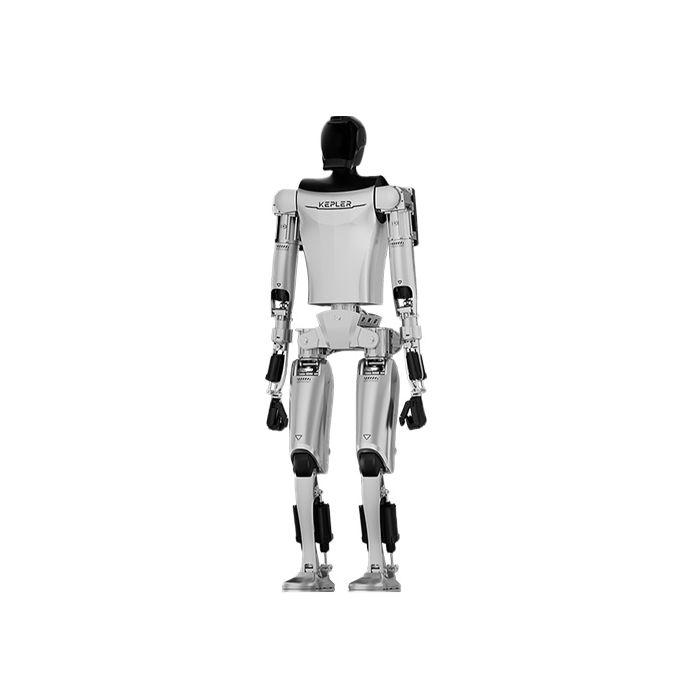
Out of stock
- BRAND:
- KEPLER
- MODEL:
- K1
- ORIGIN:
- China
- AVAILABILITY:
- SUBJECT TO AVAILABILITY
- SKU:
- Kepler-Robotics-K1
Kepler Robotics K1 Humanoid Robot
A shift on a factory floor or in a warehouse does not stop after an hour or two, and a robot that tires before the people do rarely earns its place. The Kepler Robotics K1 Humanoid Robot was built around that plain fact: it carries an 8-hour battery endurance, a body of 40 degrees of freedom and hands that can handle real objects. It is a machine meant to work a full working day among people, not to be admired for a few minutes at a trade show.
The product is available through this page, by quotation.
Background
Humanoid robots have moved quickly from laboratory demonstrations to working pilots. The K1 belongs to that shift, and its history explains much of what it is designed to do.
Kepler and the Forerunner lineage
Kepler is a Shanghai-based robotics company. Its Forerunner K1 was launched in November 2023 and is the result of three years of intensive research and four product iterations. The original Forerunner is now called the K1, and it sits in a series with two other models, the S1 and the D1. The company has since extended its range further with the K2 line, a separate product family.
That lineage matters to a buyer. A platform that went through four iterations before launch has had its basic choices tested and revised: how the legs are driven, how the hands grip, and how the software shares work between the robot and the cloud. If you are comparing platforms, the Bipedal Humanoids category shows where the K1 sits among other walking machines.
Positioning and key technology
The K1 is aimed at manufacturing, logistics, education, research and inspection tasks. Its mechanical design is built on in-house roller-screw actuators in the arms and legs, with custom rotary actuators for the waist and shoulder joints. The body has 40 degrees of freedom and uses linear actuators for the legs, and the hands have 12 degrees of freedom.
On the computing side, the Forerunner series integrates a motherboard with a processor providing 100 TOPS of computing performance into the NEBULA system. This supports four primary functions: visual recognition, visual SLAM (Simultaneous Localization and Mapping), multimodal interaction and hand-eye coordination. Kepler pairs a cloud-based multimodal large model with a smaller, industry-specific model that runs on the robot itself for quicker response times.
Technical Specifications
| Specification | Value |
|---|---|
| Model | Kepler Robotics K1 Humanoid Robot |
| Height | 5 ft., 10 in. (178 cm) |
| Weight | 187 lb. (85 kg) |
| Body degrees of freedom | 40 DoF |
| Hand degrees of freedom | 12 degrees of freedom |
| Leg actuation | Linear actuators |
| Arm and leg actuators | In-house roller-screw actuators |
| Waist and shoulder joints | Custom rotary actuators |
| Computing performance (Forerunner series: K1, S1, D1) | 100 TOPS |
| Battery endurance | 8 hours |
| Total payload | Up to 25 kg (55 lb) |
| Launch | November 2023 |
Specifications as published by the manufacturer; confirmed against the datasheet at quotation.
The manufacturer has not published the battery capacity, the walking speed, the charging time, the IP rating, the operating temperature, the connectivity, the included accessories, the software SDK, the camera and sensor models or the operating system; they are confirmed at quotation.
What makes the K1 different from a fixed automation cell?
A fixed cell does one job well and asks the building to adapt around it. The K1 reverses that arrangement. With a height of 178 cm and a weight of 85 kg, it is close to the proportions of the people who already work in many facilities, so the aim is to place it into spaces and workflows that exist today.
The hands add to this. With 12 degrees of freedom and sensor-packed, human-like construction, they are meant for grasping objects rather than for a single fixed tool. Combined with a total payload of up to 25 kg (55 lb), the K1 is positioned for handling tasks that vary from one hour to the next.
The software side is also a distinguishing choice. A cloud-based multimodal large model handles broad understanding, while a smaller industry-specific model on the robot keeps response times quick. That split means the robot is not wholly dependent on a remote connection for every decision.
Why do the actuators and the 8-hour battery matter?
Humanoid robots are often judged by their appearance, but the working qualities lie in the joints and the power. Roller-screw actuators in the arms and legs are an in-house design at Kepler, and the custom rotary actuators at the waist and shoulders complete the drive system. Linear actuators in the legs are part of how the body reaches 40 degrees of freedom.
An 8-hour battery endurance is the figure that connects the engineering to a practical day. It lines up with a standard shift, which is what a logistics or manufacturing planner will ask about first. A buyer planning charging routines should raise them when requesting a quotation.
Who is the Kepler Robotics K1 for?
Manufacturers and logistics operators are the first group. They have tasks such as moving and positioning loads of up to 25 kg (55 lb) in buildings designed around people, and they want to test whether a human-form robot can take on part of that work.
Universities, technical schools and research institutes form the second group. Education and research are target applications, and a platform with 40 degrees of freedom, dexterous hands and a layered AI stack gives teams real hardware for studying locomotion, manipulation and human-robot interaction.
Inspection teams are the third group. A walking robot with visual recognition and mapping can reach places that were built for people on foot. Buyers who prefer a different form or generation can look at the Kepler K2 Hornet Humanoid Robot, or browse the wider Humanoids category to compare options.
What is the Kepler Robotics K1 used for?
- Manufacturing support: moving and handling parts in a plant without rebuilding the line around a machine.
- Logistics handling: carrying and placing goods within the payload limit in warehouse settings.
- Education: giving students hands-on access to a full-size humanoid platform.
- Research: studying bipedal locomotion, dexterous manipulation and multimodal AI on real hardware.
- Inspection tasks: walking through facilities and using visual recognition and SLAM to review equipment and spaces.
- Hand-eye coordination work: combining vision with the 12-degree-of-freedom hands for grasping and placing objects.
Pricing and Availability
We do not print prices for this robot, because a humanoid platform is configured and quoted for each project. Request a quotation and tell us about your application, your site and your timeline. Delivery, customs and support are arranged with the quotation, so you receive one clear plan rather than separate pieces. The Kepler Robotics K1 Humanoid Robot is available on this page.
Frequently Asked Questions
How tall and how heavy is the K1?
The K1 stands 5 ft., 10 in. (178 cm) tall and weighs 187 lb. (85 kg).
How long does the battery last?
The K1 has an 8-hour battery endurance.
What can the K1 carry?
It can work with total payloads of up to 25 kg (55 lb), using sensor-packed, human-like hands for grasping objects.
How capable are the hands and the body?
The hands have 12 degrees of freedom, and the body has 40 degrees of freedom with linear actuators in the legs.
What computing does the K1 use?
The Forerunner series, which includes the K1, integrates a processor providing 100 TOPS of computing performance. A cloud-based multimodal large model works together with a smaller industry-specific model on the robot.
Which tasks is the K1 intended for?
Its target applications are manufacturing, logistics, education, research and inspection tasks.
Where can I buy the Kepler Robotics K1 Humanoid Robot and what does it cost?
You can request it through this page, and the cost is provided in a quotation prepared for your project. No price is listed here; delivery, customs and support are arranged with the quotation.
Summary
The question for any working robot is whether it can last the day among people. The Kepler Robotics K1 answers with an 8-hour battery endurance, a 40-degree-of-freedom body, hands with 12 degrees of freedom, a payload of up to 25 kg (55 lb) and a two-layer AI design. It comes from a company that took three years and four iterations to reach launch. If you are weighing a humanoid for production, logistics, teaching or inspection, this page is the starting point.


