
OrionStar GreetingBot Nova
In stock
- BRAND:
- ORIONSTAR
- AVAILABILITY:
- SUBJECT TO AVAILABILITY
- SKU:
- OrionStar-GreetingBot-Nova
OrionStar GreetingBot Nova
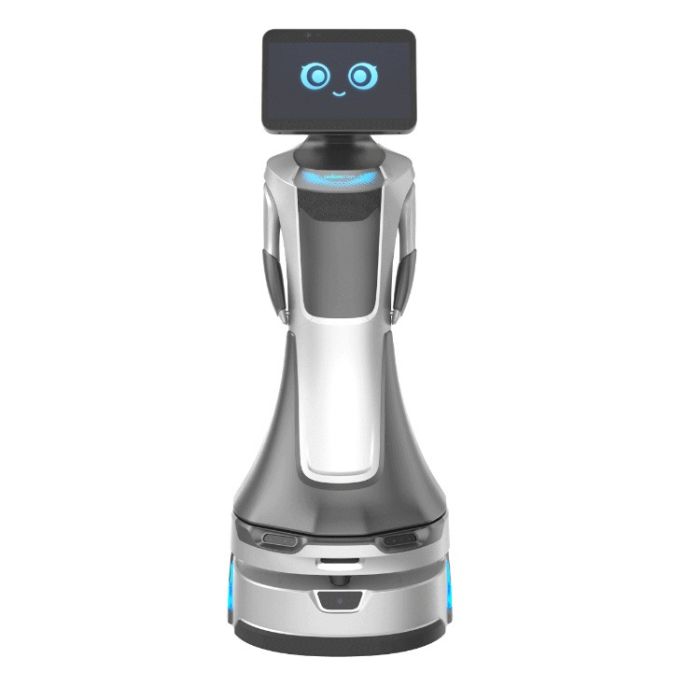
A reception desk is staffed for a few hours, but a lobby is open far longer, and visitors still want an answer, a direction and a friendly face. The OrionStar GreetingBot Nova is built for that gap. It is a large language model robot that talks, drives itself through a building, and shows your own marketing material on its screen while it does so.
The product is available through this page, by quotation.
Background
OrionStar and the road to Nova
OrionStar builds service robots, and the GreetingBot line is its family of reception and guidance machines. The Nova holds a particular place in that family: it is OrionStar's first large language model robot for the global market. Earlier greeting robots followed scripted dialogue. The Nova moves to open conversation, and it pairs that with navigation and customization capabilities that sit at the center of the design.
You can see the other robots from the same brand in the OrionStar category, which is a useful place to compare the Nova with the rest of the range before you ask for a quotation.
Positioning and key technology
The Nova is aimed at places where people arrive with questions: hotels, offices, showrooms, public venues and event halls. Its voice side draws on ChatGPT, Google Dialogue and OrionStar's own LLM technology, and it handles voice interaction in over 30 languages. For a Caribbean property that welcomes guests from many countries, that range matters in daily use.
On the movement side, the robot runs marker-free V-SLAM 2.0 with a 3D LiDAR, three depth cameras, two fisheye cameras and an odometer with an IMU. The result is a machine that reads its surroundings directly instead of waiting for stickers or tags to be placed along its route.
Technical Specifications
| Specification | Value |
|---|---|
| Overall size | 558 x 525 x 1350 mm |
| Net weight | 56 kg |
| Color | Silver + Gunmetal gray |
| Screen | 14-inch; 1080 FHD |
| Head camera | 13M high-definition camera × 1 |
| Cruising speed | 0.5 ~ 1.2 m/s (adjustable) |
| Cruising time | 12 -14 H (typical cruising scene) |
| Charging time | 4.5 H (using charging dock) |
| Charging mode | Automatic charging dock, Cable |
| Voice AI | ChatGPT, Google Dialogue and OrionStar LLM Technology; voice interaction in over 30 languages |
| LiDAR | 3D LiDAR, 170-degree field of view, extending to 240 degrees on the horizontal plane |
| Navigation | Marker-free V-SLAM 2.0 |
| Sensors | LiDAR ×1, 3× depth camera, 2× fisheye camera (top/bottom), 2× IR charging camera, odometer + IMU |
| Operating system | Android 9.0 with AgentOS |
| Connectivity | Wi-Fi 2.4/5 GHz, 4G |
| Auto recharge | Returns to its charging dock when the battery drops below 10% |
Specifications as published by the manufacturer; confirmed against the datasheet at quotation. The manufacturer has not published the payload, the IP rating, the battery capacity, the power consumption, the climbing ability, the box contents, the maximum map area or the operating noise level; they are confirmed at quotation.
What makes the GreetingBot Nova different from a marker-based robot?
Many guidance robots need markers placed in the building so that they can find their position. That works in a small, low room. It becomes awkward in a large atrium, a convention hall or a lobby with a high ceiling, where markers are hard to place and easy to disturb. The Nova takes the other path. It uses a Marker-Free Deployment approach, built to meet the deployment demands of large areas and high-ceiling environments.
Behind that approach is the sensor set. A 3D LiDAR with a 170-degree field of view, extending to 240 degrees on the horizontal plane, looks across the space. Three depth cameras and two fisheye cameras, one at the top and one at the bottom, add close-range and wide-angle views. An odometer and an IMU keep track of the robot's own movement. Together they feed marker-free V-SLAM 2.0, so the robot works from the room itself.
For a buyer, the practical meaning is simpler installation planning. You do not have to dress the building for the robot. You describe the spaces, and the deployment is arranged around them.
How does the GreetingBot Nova keep working through the day?
A greeting robot that is often on its charger is a poor greeter. The Nova is specified with a cruising time of 12 -14 H in a typical cruising scene, and a charging time of 4.5 H when it uses the charging dock. It can also be charged by cable.
The robot manages much of this itself. When its battery level drops below 10%, it returns to its charging dock to recharge. Two IR charging cameras help it line up with the dock. Cruising speed is adjustable from 0.5 to 1.2 m/s, so you can set a slow, calm pace for a crowded lobby and a brisker one for open corridors.
Connectivity is by Wi-Fi at 2.4 and 5 GHz, with 4G as well. The operating system is Android 9.0 with AgentOS, which gives your technical team a familiar platform. The Nova also comes with enhanced hardware interfaces and expanded peripheral space, so a wider variety of devices can be attached.
Who is the GreetingBot Nova for?
Hotels and resorts are the natural first buyers. A guest arriving late can ask where breakfast is served, how to reach the pool or what is on at the property, in the language that is most comfortable for them. The robot can then lead the way. With voice interaction in over 30 languages, one machine can serve a mixed crowd.
Corporate offices and business centers are the second group. A visitor can be welcomed, informed and escorted while the front desk staff deal with the tasks that need a person. Showrooms, retail spaces and exhibition venues form the third group, because the 14-inch 1080 FHD screen supports customized marketing materials. Your own promotions, product information or event schedules can sit on a screen that people actually stop to read.
Operators of large buildings with high ceilings, such as terminals, convention halls and big lobbies, will find the marker-free approach most relevant. If you are still choosing between robots, the OrionStar category lets you compare the Nova with other machines in the same family, and our team can help you match the robot to the job.
What is the GreetingBot Nova used for?
- Welcoming visitors: greets guests at the entrance and holds a spoken conversation using ChatGPT, Google Dialogue and OrionStar LLM Technology.
- Multilingual assistance: handles voice interaction in over 30 languages for international guests and staff.
- Guided movement: moves through the building on marker-free V-SLAM 2.0 at an adjustable 0.5 ~ 1.2 m/s.
- Marketing display: shows customized marketing materials on its 14-inch high-definition screen.
- Large-space coverage: works in large areas and high-ceiling environments without markers.
- Added devices: carries extra devices through its enhanced hardware interfaces and expanded peripheral space.
Pricing and Availability
We do not print prices on this page. Quotation is the next step: tell us about your venue, the languages you need and the tasks you have in mind, and we will prepare an offer. Delivery, customs and support are arranged with the quotation, so you deal with one point of contact from the first question to the day the robot arrives. The OrionStar GreetingBot Nova is available on this page.
Frequently Asked Questions
What kind of robot is the OrionStar GreetingBot Nova?
It is OrionStar's first large language model robot for the global market, with navigation and customization capabilities. It is built for reception, information and guidance work.
Which languages does it speak?
It supports voice interaction in over 30 languages. It is equipped with ChatGPT, Google Dialogue and OrionStar LLM Technology.
How big and how heavy is it?
The overall size is 558 x 525 x 1350 mm and the net weight is 56 kg. The color is Silver + Gunmetal gray.
How long does it run and how does it charge?
Typical cruising time is 12 -14 H, and charging takes 4.5 H using the charging dock. It charges through an automatic charging dock or by cable, and it returns to the dock by itself when the battery drops below 10%.
Does it need markers installed in the building?
No. It uses a Marker-Free Deployment approach, based on marker-free V-SLAM 2.0, which suits large areas and high-ceiling environments.
Can I show my own content on the screen?
Yes. The 14-inch 1080 FHD screen supports customized marketing materials.
Where can I buy the OrionStar GreetingBot Nova and what does it cost?
You can request it through this page, by quotation. We do not publish a price here; the offer is prepared once we know your project, and it covers delivery, customs and support.
Summary
The front desk closes, but the lobby does not. The OrionStar GreetingBot Nova answers that with conversation in over 30 languages, marker-free navigation across large and high spaces, a long working day on a single charge cycle and a screen that carries your own message. Its figures are listed in the table above. If you want a reception robot that speaks to your guests and finds its own way, this page is the starting point.


