
Xiaomi Cyberone Humanoid Robot
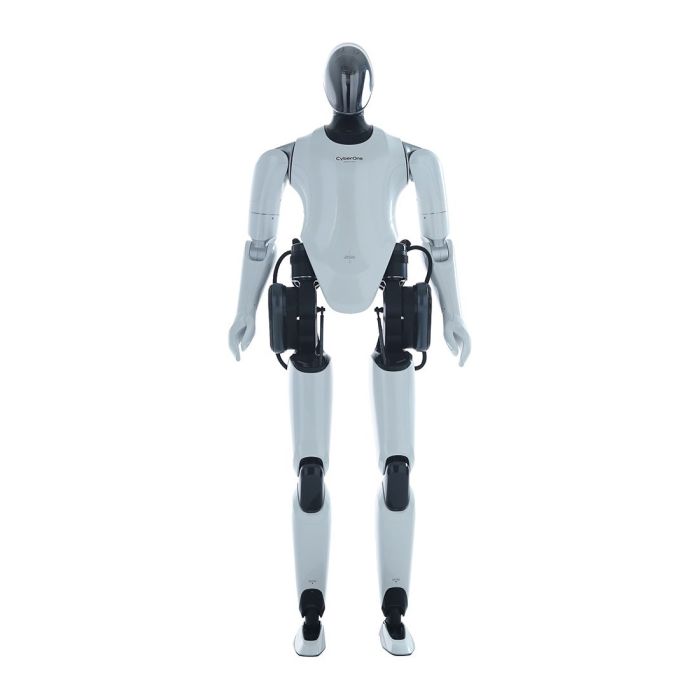
In stock
- BRAND:
- XIAOMI
- MODEL:
- CyberOne
- ORIGIN:
- China
- AVAILABILITY:
- SUBJECT TO AVAILABILITY
- SKU:
- Xiaomi-CyberOne
Xiaomi Cyberone Humanoid Robot
Some machines are built to be sold, and others are built to show what a company is thinking. The Xiaomi Cyberone Humanoid Robot belongs to the second group: a full-size biped that stands 177 centimeters tall, with a face made of curved glass and a stated goal of befriending the people it meets. For a buyer in the Caribbean, it is a window into where humanoid robotics is heading.
The Xiaomi Cyberone Humanoid Robot is available through this page, by quotation.
Background
A company that moved from phones to legs
Xiaomi is best known for consumer electronics, but its Robotics Lab has been building machines that walk. The CyberOne is the second product from that lab, following the CyberDog, a four-legged robot released earlier in the same year. Where the CyberDog proved the company could handle legged balance at small scale, the CyberOne moves that work up to a human-sized frame with arms, legs and bipedal motion.
The robot was introduced in 2022 by Lei Jun, and it carries the lab's design language: a matte white finish with dark joints. It is a research prototype and technology demonstrator, and that status matters for anyone reading the rest of this page. It is a platform for studying what a humanoid can perceive and how it can respond, not a catalog item with a fixed product sheet.
Perception first, strength second
What sets the CyberOne apart in its positioning is the weight Xiaomi gives to interaction. The robot uses an in-house Mi-Sense depth vision module together with an AI interaction algorithm to process its surroundings. Its voice system uses dual-microphone recognition, and its AI-based algorithms detect 45 classifications of human emotion and recognize 85 types of environmental sounds.
Those features are integrated into the robot's processing units, which are paired with a curved OLED module that displays real-time interactive information. In practice, the face is not decoration: it is the channel through which the machine shows what it has understood.
Technical Specifications
| Specification | CyberOne (2022) |
|---|---|
| Height | 177 centimeters |
| Weight | 52 kilos |
| Arm span | 168 centimeters |
| Degrees of freedom | Up to 21 |
| Response speed | 0.5ms for each degree of freedom |
| Upper limb joint motor | 500 grams, rated output torque of up to 30Nm |
| Peak torque | Up to 300Nm |
| Peak torque density | 96 Nm/kg |
| Hand load | Up to 1.5 kilos with a single hand |
| Walking speed | 3.6km/hour |
| Emotion recognition | 45 classifications of human emotion |
| Sound recognition | 85 types of environmental sounds |
| Vision | In-house Mi-Sense depth vision module with AI interaction algorithm |
| Depth accuracy | 99% within 8 m (under Xiaomi's stated testing conditions) |
| Voice system | Dual-microphone voice recognition |
| Face display | Curved OLED module for real-time interactive information |
| Finish | Matte white with dark joints |
Specifications as published by the manufacturer; confirmed against the datasheet at quotation.
The manufacturer has not published the battery capacity, the battery runtime, the charging time, the ingress protection rating, the connectivity, the operating system, the processor, the package contents or the software compatibility; they are confirmed at quotation.
What makes the CyberOne different from a load-carrying humanoid?
Many people expect a humanoid to be judged by how much it can lift. The CyberOne's hand load is up to 1.5 kilos with a single hand, and it supports programming by demonstration. That is enough to show a task, but it is not a heavy-duty figure, and the robot is not positioned as a warehouse worker.
Its strengths lie elsewhere. The joint response of 0.5ms for each degree of freedom, across up to 21 degrees of freedom, speaks to coordinated and quick movement. The upper limb motor, at 500 grams with a rated output torque of up to 30Nm, shows how much effort went into packing torque into a light joint. Peak torque of up to 300Nm and a peak torque density of 96 Nm/kg point the same way.
The other half of the story is awareness. A depth module with the accuracy listed in the table, plus emotion and sound recognition, gives the robot a sense of the room and of the person in it. That combination is what makes it a study in human-robot interaction rather than a pure lifting machine.
What about the CyberOne V2?
A second-generation CyberOne V2 exists by name, but no specifications have been released for it. Every figure on this page belongs to the CyberOne (2022) and should not be read as a promise about any later version. If your project depends on the second generation, mention it when you ask for a quotation.
Who is the Xiaomi Cyberone Humanoid Robot for?
The robot suits organizations that study or demonstrate humanoid technology. Universities and technical institutes can use it to teach legged balance, perception and interaction. Research teams working on human-robot communication will find the combination of depth vision, voice recognition and an expressive face a useful reference point. Innovation centers and exhibition organizers may value it as a showpiece that people instinctively want to approach.
It is less suited to buyers who need a proven production robot, since this is a research prototype and technology demonstrator. Such buyers can browse the wider range of Bipedal Humanoids or the broader Humanoids category to compare alternatives.
What is the Xiaomi Cyberone Humanoid Robot used for?
- Research on bipedal motion. Its arms, legs and bipedal motion give labs a human-scale platform for balance and gait studies.
- Human-robot interaction studies. Emotion recognition across 45 classifications lets teams explore how a machine can respond to people.
- Acoustic awareness work. Recognition of 85 types of environmental sounds supports experiments in how a robot understands its setting.
- Vision and mapping experiments. The Mi-Sense depth vision module offers a base for studying how a humanoid reads space.
- Teaching by demonstration. Programming by demonstration with a hand load of up to 1.5 kilos suits simple manipulation lessons.
- Public demonstrations. The curved OLED face and white finish make it a striking exhibit for showcases and events.
Pricing and Availability
No prices are listed here. Because the CyberOne is a research prototype and technology demonstrator, supply is arranged by quotation. Delivery, customs and support are arranged with the quotation. Send us your requirements and we will respond; the Xiaomi Cyberone Humanoid Robot is available on this page.
Frequently Asked Questions
How tall is the Xiaomi Cyberone Humanoid Robot?
It measures 177 centimeters in height and weighs 52 kilos, with an arm span of 168 centimeters.
How fast can it walk?
It moves at 3.6km/hour.
What can it recognize?
Its AI-based algorithms detect 45 classifications of human emotion and recognize 85 types of environmental sounds. Voice recognition uses dual microphones.
How much can it carry?
It can hold up to 1.5 kilos with a single hand. For wider payload questions, ask us when you request a quotation.
What about battery life?
Please see the note under the specification table, which lists the battery and charging details together with the other open items. We will take your questions on them with the quotation.
Is the CyberOne a commercial product?
It is a research prototype and technology demonstrator. Ask us about supply when you request a quotation.
Where can I buy the Xiaomi Cyberone Humanoid Robot and what does it cost?
Enquire through this page for a quotation; no price is listed, and the cost is given with the quotation together with delivery, customs and support arrangements.
Summary
The Xiaomi Cyberone Humanoid Robot is less a product than a statement: a 177 centimeter biped with up to 21 degrees of freedom, depth vision, emotion and sound recognition, and a curved OLED face, all aimed at making a machine that can read the room. Its figures are those of the 2022 CyberOne. For research, teaching and demonstration in the Caribbean, this page is the starting point.


