
Unitree Z1 Motor
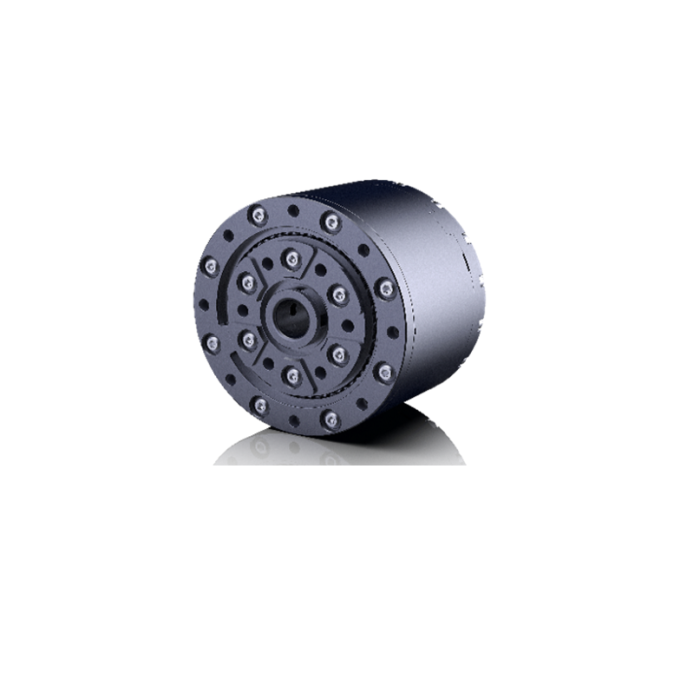
In stock
- BRAND:
- UNITREE ROBOTICS
- MODEL:
- Z1-MOTOR
- PART #:
- Z1-MOTOR
- ORIGIN:
- China
- Warranty:
- 12 MONTHS
- AVAILABILITY:
- SUBJECT TO AVAILABILITY
- SKU:
- Unitree-Z1-MOTOR
Unitree Z1 Motor
An arm is only as good as its weakest joint, and the joint is where a design either holds together or falls apart. The Unitree Z1 Motor is built for that point: a compact, harmonic-reduced actuator that senses torque, angle and angular velocity and takes commands in the same terms, plus stiffness and damping.
The product is available through this page, by quotation.
Background
Unitree Robotics and its lineage
Unitree Robotics is known for legged robots and for the manipulation hardware that extends them. Its arms, grippers and joint modules sit beside its quadrupeds and humanoids in one ecosystem. A team that buys Unitree locomotion hardware often goes on to ask how the same company approaches manipulation, and the answer starts at the joint.
The Z1 Motor comes from that work. It is the motor of the Z1 Air robotic arm, where it is named the Z1 Air Motor. It is a component, not a finished robot, and it suits buyers who think at the level of joints: engineers who maintain an arm, build a test bench, or study how a single actuator behaves under load.
Positioning and key technology
The motor pairs a harmonic reducer with an industrial-grade cross roller bearing. A harmonic reducer is a common choice where a design needs a high reduction ratio in a small, light package. A cross roller bearing carries combined loads, which matters at a joint that is pushed, pulled and twisted at once. Together they give the Z1 Motor a reduction ratio of 60+ and a maximum torque of 33N·m in a body of Φ65*52mm that weighs 405g.
The electronics are as important as the mechanics. The encoder resolution is 15bit, and the control frequency is 1KHz. The motor reports torque, angle and angular velocity as sensing feedback, and it accepts torque, angle, angular velocity, stiffness and damping as control commands. Stiffness and damping commands let a controller shape how firmly a joint holds a pose and how softly it gives way, and this is the basis of compliant behavior in manipulation.
Technical Specifications
| Specification | Value |
|---|---|
| Maximum torque | 33N·m |
| Weight | 405g |
| Size | Φ65*52mm |
| Backlash | ~6 arcmin |
| Communication method | RS 485 |
| Encoder resolution | 15bit |
| Force control accuracy | ~0.2N·m |
| Control frequency | 1KHz |
| Reducer | Harmonic Reducer |
| Bearing | Industrial grade cross roller |
| Reduction ratio | 60+ |
| Motor sensing feedback | Torque, Angle, Angular Velocity |
| Motor control command | Torque, Angle, Angular Velocity, Stiffness, Damping |
| Voltage | 24V (recommended) |
Specifications as published by the manufacturer; confirmed against the datasheet at quotation.
The manufacturer has not published the rated torque, the rated speed, the peak power, the operating temperature, the IP rating, the motor type, the supply current or the mounting dimensions; they are confirmed at quotation.
What makes the Z1 Motor different from a generic servo?
A generic hobby servo trades precision for price. It usually offers position control and little else. The Z1 Motor is specified in the language of robot control. It feeds back three quantities, torque, angle and angular velocity, and it accepts five kinds of command. That combination lets a controller treat the joint as a tunable spring and damper instead of a position follower.
Force control accuracy of ~0.2N·m, set against a maximum torque of 33N·m, tells you the motor is meant for work where the amount of force matters, not just the final position. Backlash of ~6 arcmin describes how much play remains in the gear train, which affects how faithfully a taught pose is repeated. The 15bit encoder resolution and 1KHz control frequency describe how finely the joint is measured and how often the loop is closed.
The physical package supports this. At 405g and Φ65*52mm, the motor is small enough to sit at the joints of a lightweight arm, and the industrial-grade cross roller bearing carries the loads that a joint sees. The communication method is RS 485, a familiar serial bus for chaining actuators and for integrating with a custom controller. The recommended supply is 24V.
Is the Z1 Motor the same part used across the Z1 arm family?
This motor is the one named for the Unitree Z1 Air Robot Arm (Z1-AIR), which is why it carries the Z1 Air Motor name. Every figure on this page belongs to that motor and to no other part. The Unitree Z1 Pro Robot Arm (Z1-Pro) is a separate version, so if your project involves both arms, mention it in your quotation request and we will address each arm on its own.
Who is the Unitree Z1 Motor for?
The first group is maintenance and repair teams. Anyone who owns a Z1 Air arm and needs a replacement or a spare joint will want the exact part, and the quotation lets you match it to your arm. Those buyers can compare against the complete Z1 Air arm if they are weighing a repair against a new unit.
The second group is research laboratories and universities. A single actuator with torque, angle and angular velocity feedback, and stiffness and damping commands, is a useful tool for teaching impedance control and for building test rigs. The third group is integrators and developers who are designing their own lightweight manipulators and want a compact reduced actuator with a serial interface.
Buyers who want a complete working arm, not a component, should look at a full arm instead. The Z1 Pro and the Z1 Air are the arm versions in this range. Browse the Accessories category to see related parts.
What is the Unitree Z1 Motor used for?
- Replacing a joint in a Z1 Air arm. The motor is the part named for that arm, so it serves as a service item.
- Building a custom lightweight arm. A compact 405g actuator with a high reduction ratio suits small manipulators.
- Teaching joint-level control. Torque, angle and angular velocity feedback make it a clear example for coursework.
- Compliant motion experiments. Stiffness and damping commands allow a joint to be set firm or yielding.
- Force-sensitive handling research. A force control accuracy of ~0.2N·m supports studies of gentle contact.
- Bench testing and prototyping. RS 485 communication and a recommended 24V supply make it straightforward to power and command on a bench.
Pricing and Availability
No price is shown on this page. Pricing is provided by quotation: tell us the quantity and the use, and we will prepare an offer for the Unitree Z1 Motor. Delivery, customs and support are arranged with the quotation. The Unitree Z1 Motor is available on this page.
Frequently Asked Questions
What is the maximum torque of the Unitree Z1 Motor?
The maximum torque is 33N·m, with a reduction ratio of 60+ through a harmonic reducer.
How is the motor connected and powered?
It communicates over RS 485, and the recommended voltage is 24V.
What feedback does the motor provide?
It provides torque, angle and angular velocity as sensing feedback. It accepts torque, angle, angular velocity, stiffness and damping as control commands.
How large and heavy is the motor?
The size is Φ65*52mm and the weight is 405g.
Which arm uses this motor?
It is the Z1 Air Motor, used in the Z1 Air robotic arm.
How precise is the joint?
The encoder resolution is 15bit, the backlash is ~6 arcmin, the force control accuracy is ~0.2N·m and the control frequency is 1KHz.
Where can I buy the Unitree Z1 Motor and what does it cost?
You can request it through this page. The cost is given by quotation, based on your quantity and requirements, and no price is listed here.
Summary
The Unitree Z1 Motor is a small part that decides how an arm behaves. A harmonic reducer, a cross roller bearing, a 15bit encoder and a 1KHz control loop combine to give a joint that can be commanded in torque, angle, angular velocity, stiffness and damping, and that reports its state back in three quantities. It is the Z1 Air arm's motor, and a sound basis for custom joints and control research. If a precise, compact joint is what your project needs, this page is the starting point.


