
Unitree R1-A7-D Smart E Humanoid Robot
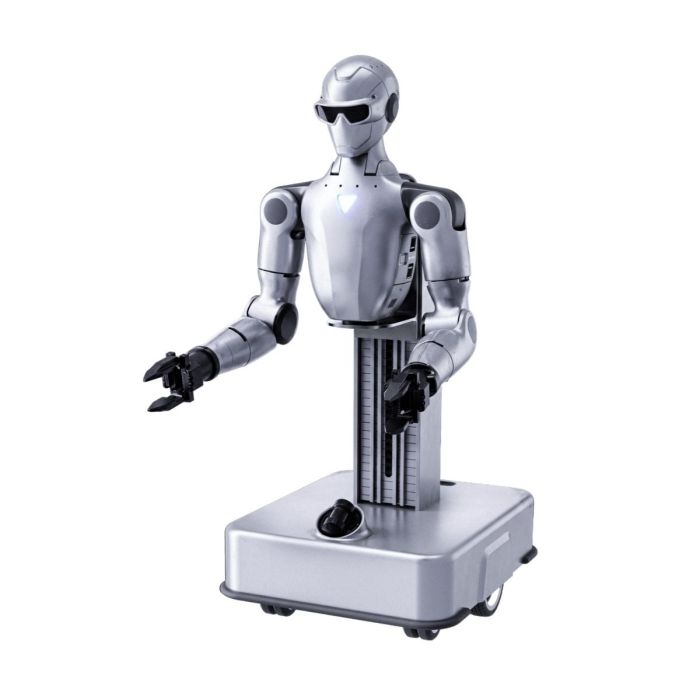
In stock
- BRAND:
- UNITREE ROBOTICS
- MODEL:
- R1-A7-D-Smart-E
- PART #:
- R1-A7-D-Smart-E
- ORIGIN:
- China
- Warranty:
- 12 MONTHS
- AVAILABILITY:
- SUBJECT TO AVAILABILITY
- SKU:
- Unitree-R1-A7-D-Smart-E
Unitree R1-A7-D Smart E Humanoid Robot
Most robots keep their thinking in one place. The Unitree R1-A7-D Smart E Humanoid Robot splits the work: a head module handles vision and AI, while an 8-core processor in the body looks after the machine itself. Add a chassis LiDAR, a binocular camera and open interfaces, and you have a humanoid platform built for teams that want to develop on it rather than just watch it.
The product is available through this page, by quotation.
Background
Unitree Robotics and the R1 lineage
Unitree Robotics is a company known for legged and humanoid robots. The R1 family covers several versions named in the sources: R1-A5, R1-A7, R1-A5-D and R1-A7-D. The "D" versions are the ones that carry the Smart configurations, which run from Smart A to Smart H at the reseller level. This page covers Smart E on the R1-A7-D base.
Because the family has many suffixes, it pays to read the full model name carefully. Every figure on this page belongs to the R1-A7-D, and nothing here is borrowed from another version in the range.
Positioning: a platform to build on
The Smart E is not sold as a finished appliance. Its head module delivers 10 TOPS of computing power, and its body processor is an 8-core high-performance CPU. For heavier workloads, a high-computing module can be fitted, with multiple brands and models available, such as Orin (40-100TOPS). Open interfaces for the underlying system, robotic arm, audio, lighting and visual control let developers reach each subsystem directly.
Hands are a choice, not a given. The end effector can be an optional two-finger gripper, a three-finger dexterous hand or a five-finger dexterous hand. That makes the robot suitable for a range of manipulation studies, from simple pick-and-place to finer dexterity work.
Technical Specifications
| Specification | Value |
|---|---|
| Weight (R1-A7-D) | Approx. 32kg |
| Shrunk size (R1-A7-D) | 683x520x440mm |
| Raised size (R1-A7-D) | 1600x520x440mm |
| Head module computing power | 10 TOPS |
| Body processor | 8-core high-performance CPU |
| High-computing module | Multiple brands and models available, such as Orin (40-100TOPS) |
| Binocular field of view | Horizontal 146°, Vertical 124° |
| Binocular eye spacing | 60mm |
| Waist (R1-A7-D) | Yaw ±35° |
| Cervical joint movement space | Yaw ±115°, Pitch ±36° |
| Speaker | Dual Speakers (3W×2) |
| Sensors (R1-A7-D) | Chassis LiDAR + Binocular Camera + Optional Wrist Camera |
| Battery life (battery-powered) | Approx. 1.5h |
| Wireless | WiFi 6 & Bluetooth 5.2 |
| Open interfaces | Underlying system, robotic arm, audio, lighting, visual control, etc. |
| End effector options | Optional two-finger gripper / three-finger dexterous hand / five-finger dexterous hand |
| Charger | Included |
Specifications as published by the manufacturer; confirmed against the datasheet at quotation.
The manufacturer has not published the total degrees of freedom for the Smart E, the chassis LiDAR model, the maximum travel speed, the charging time, the IP rating, the hand weight and grip force, or the battery capacity; they are confirmed at quotation.
What makes the Smart E different from a single-computer humanoid?
In many humanoid platforms, one computer runs everything: perception, planning and low-level control. The Smart E divides the load. The head module, rated at 10 TOPS, sits next to the binocular camera, so image processing happens close to the sensor. The 8-core body processor is a separate resource for the rest of the machine.
This split matters in practice. A research team can experiment with vision models without competing against the control software for the same processor. When a project outgrows the head module, a high-computing module such as an Orin, in the 40-100TOPS range, can be specified instead. Multiple brands and models are available, so the exact choice is settled when the configuration is quoted.
Perception is also well described. The binocular camera covers a horizontal field of view of 146° and a vertical field of view of 124°, with an eye spacing of 60mm. A chassis LiDAR adds ranging at the base, and an optional wrist camera can be added for work close to the hand. The neck turns ±115° in yaw and ±36° in pitch, and the waist turns ±35° in yaw, so the robot can point its sensors without moving its whole body.
How does the robot's size help with transport and use?
The R1-A7-D can be stored in a shrunk size of 683x520x440mm and raised to 1600x520x440mm. It weighs approx. 32kg. For a laboratory, a classroom or a demonstration site, a machine that packs down this far is easier to move between rooms and to store between sessions than a fixed-height humanoid.
Battery life is approx. 1.5h when battery-powered, and a charger is included. For longer sessions, plan your schedule around that figure. Connectivity comes through WiFi 6 and Bluetooth 5.2, so the robot can join a lab network or pair with nearby devices.
Who is the Unitree R1-A7-D Smart E Humanoid Robot for?
University and institute labs are the most natural buyers. They need a humanoid with accessible compute, documented sensors and open interfaces, so students and researchers can write their own software. The choice of hand lets a lab start with a simple gripper and move to a more dexterous hand as projects mature.
System integrators and technology companies form the second group. They can evaluate the Smart E for interaction, guidance or demonstration roles, using the speakers, lighting interfaces and visual control interfaces. Training centers and technical schools can use it to show students what a modern humanoid platform looks like in operation.
If you are still comparing configurations, the R1-A7-D Smart category lists the other Smart versions side by side, and the Unitree R1-A7-D category shows the wider range. Compare compute, hand and sensor choices with your own requirements before you request a quotation.
What is the Unitree R1-A7-D Smart E Humanoid Robot used for?
- Robotics research. Test perception, motion and manipulation software on a humanoid with open interfaces.
- Education and training. Give students hands-on time with a real humanoid platform and its sensors.
- Vision and AI development. Build and run vision models using the head module and the binocular camera.
- Manipulation studies. Compare two-finger, three-finger and five-finger end effectors on the same base.
- System integration. Connect the arm, audio, lighting and visual control to your own software stack.
- Demonstrations and evaluation. Show a humanoid at events, or assess it for a planned deployment.
Pricing and Availability
We do not publish prices on this page. Quotation is the way to buy: tell us the hand option, the compute module and any accessories you need, and we will prepare an offer. Delivery, customs and support are arranged together with the quotation. The Unitree R1-A7-D Smart E Humanoid Robot is available on this page.
Frequently Asked Questions
How much does the robot weigh, and how big is it?
The R1-A7-D weighs approx. 32kg. Its shrunk size is 683x520x440mm and its raised size is 1600x520x440mm.
What computing power does it have?
The head module provides 10 TOPS, and the body uses an 8-core high-performance CPU. A high-computing module, such as an Orin (40-100TOPS), can be specified for heavier work.
Which sensors are fitted?
The robot carries a chassis LiDAR and a binocular camera. A wrist camera is optional. The binocular field of view is 146° horizontal and 124° vertical.
Which hands can I choose?
You can choose an optional two-finger gripper, a three-finger dexterous hand or a five-finger dexterous hand.
How long does the battery last?
Battery life is approx. 1.5h when battery-powered, and a charger is included.
Can I program it myself?
Yes. Open interfaces cover the underlying system, robotic arm, audio, lighting and visual control, so developers can connect their own software.
Where can I buy the Unitree R1-A7-D Smart E Humanoid Robot and what does it cost?
You can buy it through this page, by quotation. The cost depends on the configuration you choose, so send us your requirements and we will prepare an offer.
Summary
The Smart E is a humanoid with two processing centers, a head module for vision and AI and an 8-core body processor, plus an option to step up to a higher-computing module. Add a wide-angle binocular camera, a chassis LiDAR, open interfaces and a choice of three hands, and it becomes a platform you can shape to your project. It packs down for transport and stands tall for work. If that suits your lab, classroom or integration project, this page is the starting point.


