
Unitree R1-A5-D Smart C Humanoid Robot
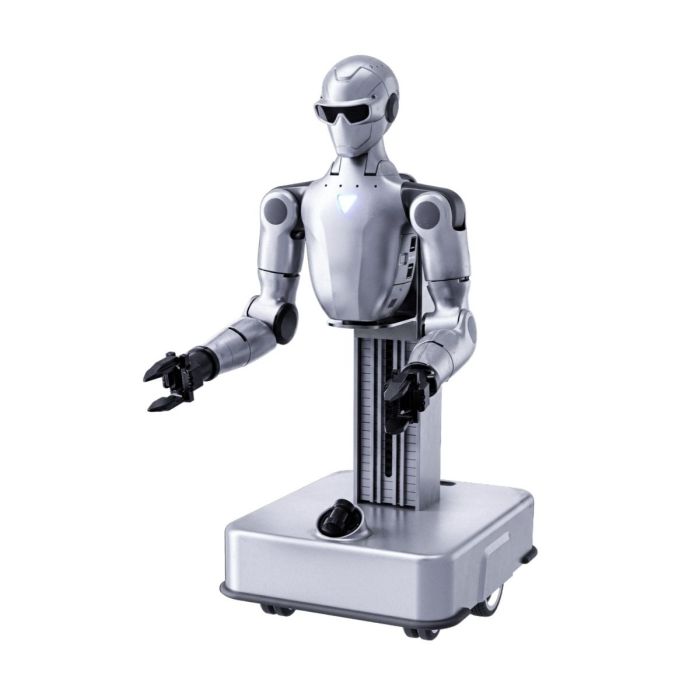
In stock
- BRAND:
- UNITREE ROBOTICS
- MODEL:
- R1-A5-D-Smart-C
- PART #:
- R1-A5-D-Smart-C
- ORIGIN:
- China
- Warranty:
- 12 MONTHS
- AVAILABILITY:
- SUBJECT TO AVAILABILITY
- SKU:
- Unitree-R1-A5-D-Smart-C
Unitree R1-A5-D Smart C Humanoid Robot
A humanoid is often judged by its hands and its stride, but a working robot is judged just as much by what it senses and how easily you can reach into it. The Unitree R1-A5-D Smart C Humanoid Robot is built around that second idea: a head with a binocular camera, a waist that turns, a chassis with LiDAR, and open interfaces that let your own software take part.
The Unitree R1-A5-D Smart C Humanoid Robot is available through this page, by quotation.
Background
Unitree Robotics and the R1 line
Unitree Robotics is a company known for building legged and humanoid platforms that research labs, universities and integrators can buy and program themselves. The R1 line sits in that tradition. It gives teams a physical robot to develop against, rather than a closed product that only runs what the maker ships.
The R1-A5-D family is split into several named versions, including R1-A5, R1-A7, R1-A5-D and R1-A7-D. The Smart C configuration described here belongs to the R1-A5-D group. Every figure on this page is given for the R1-A5-D and is not borrowed from any other version.
How the R1-A5-D is positioned
The R1-A5-D is positioned as a platform for perception, interaction and manipulation work. Its sensing stack combines chassis LiDAR with a binocular camera, and a wrist camera can be added. Its computing is split between the body and the head, so that perception can be handled close to the cameras.
The joints use a low-inertia, high-speed inner rotor PMSM motor, which gives superior responsiveness and heat dissipation. For a robot that has to turn its head, rotate its waist and move arms with an end effector, quick and stable joint response matters more than any single headline number.
Technical Specifications
| Specification | Value |
|---|---|
| Weight | Approx. 30kg |
| Waist joint motion range | Waist: Yaw±35° |
| Head joint motion range | Head: Yaw±115° Pitch±36° |
| Joint motor | Low-Inertia High-Speed Inner Rotor PMSM (Superior Responsiveness & Heat Dissipation) |
| Sensing | Chassis LiDAR + Binocular Camera + Optional Wrist Camera |
| Binocular field of view | Horizontal 146°, Vertical 124° |
| Base computing power | Body: 8-core high-performance CPU; Head: 8-core high-performance CPU + 10 TOPS |
| High-computing module option | such as Orin(40-100TOPS), etc. |
| Speaker | Dual Speakers (3W×2) |
| Battery life (battery-powered) | Approx. 1.5h |
| End effector options | Optional two-finger gripper / three-finger dexterous hand / five-finger dexterous hand |
| Open interfaces | Open interfaces for the underlying system, robotic arm, audio, lighting, visual control, etc. |
Specifications as published by the manufacturer; confirmed against the datasheet at quotation.
The manufacturer has not published the Smart C configuration details, the IP rating, the battery capacity, the travel speed of the chassis, the operating temperature or the noise level; they are confirmed at quotation.
How does the R1-A5-D Smart C handle perception and computing?
Perception starts with the binocular camera, which covers 146° horizontally and 124° vertically. That is a wide view for a head-mounted sensor, and the head can turn ±115° in yaw and ±36° in pitch. Together they let the robot look toward a person, a shelf or a work surface without moving the whole body. The chassis LiDAR adds a second kind of sensing aimed at the space around the base, and an optional wrist camera can be specified when close-up views of the hand are needed.
Computing is divided in two. The body carries an 8-core high-performance CPU. The head carries another 8-core CPU together with 10 TOPS of AI computing. Putting that capacity in the head keeps image processing near the cameras. Where a project needs more, a high-computing module option is available, such as Orin at 40 to 100 TOPS. Choose the module that fits your workload when you request a quotation.
The open interfaces matter as much as the hardware. The robot offers open interfaces for the underlying system, the robotic arm, audio, lighting and visual control. In practice this means a development team can drive the arm, play sound, change lights and read vision data from its own code, rather than being limited to a fixed set of behaviors.
What does the choice of end effector change?
The R1-A5-D can be fitted with a two-finger gripper, a three-finger dexterous hand or a five-finger dexterous hand. The choice shapes what the robot can do with objects. A two-finger gripper suits simple pick-and-place and repeatable tasks. A three-finger or five-finger dexterous hand suits research into grasping, handover and manipulation of varied objects.
Because the end effector is an option, it should be named when you request a quotation. The waist adds reach by turning ±35° in yaw, and the head sensors help the robot find what the hand is meant to reach. The weight of approximately 30kg is worth planning for when you think about where the robot will be placed, moved and stored.
Who is the Unitree R1-A5-D Smart C Humanoid Robot for?
University and institute labs are a natural fit. The open interfaces, the selectable hands and the optional higher-compute module give researchers room to test perception, speech, interaction and manipulation ideas on real hardware.
System integrators and product teams can use it as a development platform before committing to a deployment. Educators can use it to show students how sensing, computing and motion fit together in one machine. Demonstration and showcase teams may value the head movement, the dual speakers and the lighting interfaces for interactive experiences.
If you want to compare neighboring configurations, the store lists several of them: Unitree R1-A5-D Smart A Humanoid Robot, Unitree R1-A5-D Smart B Humanoid Robot, Unitree R1-A5-D Smart D Humanoid Robot and Unitree R1-A5-D Smart Ultimate G Humanoid Robot. The wider range is gathered in the Unitree R1-A5-D category.
What is the Unitree R1-A5-D Smart C Humanoid Robot used for?
- Perception research: test vision and LiDAR-based sensing with a wide binocular view and a head that can turn and tilt.
- Manipulation studies: work with a two-finger gripper or a three-finger or five-finger dexterous hand on grasping tasks.
- Human-robot interaction: use the dual 3W speakers, lighting and head movement to build robots that respond to people.
- Teaching and training: give students a physical platform for studying sensing, computing and motion control.
- Software development: write your own control code against the open interfaces for the system, arm, audio, lighting and vision.
- Operational evaluation: assess how a humanoid platform with onboard computing fits your own site and processes before wider use.
Pricing and Availability
We do not print prices on this page. A quotation is the way to buy, and it lets us match the hand option, the compute option and any accessories to your project. Delivery, customs and support are arranged together with the quotation. The Unitree R1-A5-D Smart C Humanoid Robot is available on this page.
Frequently Asked Questions
How long does the battery last?
Battery life is approximately 1.5h when the robot is battery-powered. Plan your sessions and charging around that figure.
What does the robot weigh?
The R1-A5-D weighs approximately 30kg. Plan your handling and placement with that figure in mind.
Which hands can be fitted?
You can choose an optional two-finger gripper, a three-finger dexterous hand or a five-finger dexterous hand. Please name your choice when requesting a quotation.
Can I add more computing power?
Yes, a high-computing module option is available, such as Orin at 40 to 100 TOPS. The base configuration already offers an 8-core CPU in the body and an 8-core CPU plus 10 TOPS in the head.
Can I program the robot myself?
The robot has open interfaces for the underlying system, the robotic arm, audio, lighting and visual control. These let your own software work with the robot.
What about the IP rating, operating temperature and noise level?
Please raise these when you request a quotation, and we will go through them with you.
Where can I buy the Unitree R1-A5-D Smart C Humanoid Robot and what does it cost?
You can buy it through this page by requesting a quotation. The cost depends on the configuration you choose, so no price is shown here.
Summary
The Unitree R1-A5-D Smart C Humanoid Robot is a platform for teams that care about what a robot sees, how it computes and how openly it can be controlled. A wide binocular view, a head and waist that move, chassis LiDAR, dual-CPU computing with 10 TOPS in the head, a choice of hands and open interfaces make it a flexible base for research, teaching and integration work. When you are ready to compare options and request a quotation, this page is the starting point.


