
Unitree H2-A Standard I Humanoid Robot
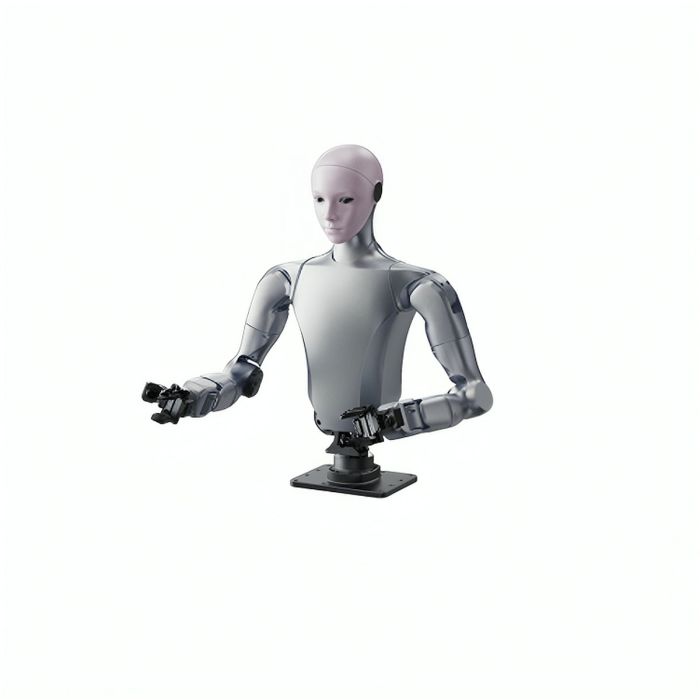
In stock
- BRAND:
- UNITREE ROBOTICS
- MODEL:
- H2-A-Standard-I
- PART #:
- H2-A-Standard-I
- ORIGIN:
- China
- Warranty:
- 12 MONTHS
- AVAILABILITY:
- SUBJECT TO AVAILABILITY
- SKU:
- Unitree-H2-A-Standard-I
Unitree H2-A Standard I Humanoid Robot
Most of a humanoid's strength is spent just staying upright. The Unitree H2-A Standard I Humanoid Robot is built around that fact: its leg joints are rated for three times the torque of its arm joints, because the legs carry the whole machine while the arms do the work. That split tells you a good deal about how this robot is meant to be used.
The Unitree H2-A Standard I Humanoid Robot is available through this page, by quotation.
Background
Unitree Robotics and its lineage
Unitree Robotics is known for compact, high-torque joint actuators, first proven in quadruped robots and later carried into bipedal humanoids. That actuator experience matters in a humanoid. Every joint has to be strong, light and quick to respond, and the same design thinking runs through the H2 family. Labs, universities and integrators across the world use Unitree platforms for research, teaching and applied robotics work.
The H2 sits in the full-size part of that range. It is a humanoid with a bionic head and facial features, and a body made for walking, reaching and carrying. The fact sheet for this page names three versions of the platform: H2, H2 EDU and H2 Plus. This page covers the Standard I configuration, and the figures below are those of the H2 platform.
Positioning and key technology
The H2 is designed at 180 cm, a human scale that suits human spaces. Its structure combines aircraft-grade aluminum, titanium alloy and high-strength engineering plastics. This keeps the frame rigid where loads are high and light where they are not.
The platform has 31 degrees of freedom in total. Each leg has 6 and each arm has 7. The seven-axis arm is the more important number for manipulation work, because an extra axis lets the arm approach an object from several angles and work around obstacles. For sensing, the robot has a humanoid binocular camera with a wide field of view. For interaction, it has an array microphone and a high-power speaker.
Technical Specifications
| Specification | Value (H2 platform) |
|---|---|
| Design height | 180 cm humanoid design |
| Dimensions (standing) | 1820 x 456 x 218mm |
| Weight (with battery) | About 70kg |
| Total degrees of freedom | 31 |
| Single leg degrees of freedom | 6 |
| Single arm degrees of freedom | 7 |
| Maximum torque of arm joint | 120N.m |
| Maximum torque of leg joint | 360N.m |
| Arm maximum payload | Peak: ~15 kg; Rated: ~7 kg |
| Battery capacity | 15Ah (0.972KWh) |
| Battery life | About 3h |
| Sensing | Humanoid Binocular Camera with Wide Field of View |
| Voice interaction | Array Microphone and High-Power Speaker |
| Connectivity | Wi-Fi 6, Bluetooth 5.2 |
| Materials | Aircraft-Grade Aluminum + Titanium Alloy + High-Strength Engineering Plastics |
| Bionic head with facial features | Yes |
| Included accessories | Smart Battery (Quick Release), Charger, Manual Controller |
Specifications as published by the manufacturer; confirmed against the datasheet at quotation.
The manufacturer has not published the top speed, the IP rating, the camera resolution, the charging time, the operating temperature or the weight of the battery; they are confirmed at quotation.
Why do the leg and arm torque figures differ so much?
The leg joint is specified at 360N.m and the arm joint at 120N.m. The difference follows from the job each limb does. In a walking robot, the hips and knees carry the full weight of the body, and they absorb impact with every step. They also have to recover balance. A leg that is too weak cannot hold the body up or catch a stumble. The arms carry only what they pick up, plus their own weight.
The arm figures are worth reading closely. The maximum payload is a peak of about 15 kg and a rated load of about 7 kg. The rated figure is the one to use when planning a repeated task. The peak figure describes what the arm can manage briefly. Anyone designing a handling job should plan around the rated load and treat the peak as headroom.
Weight is the other half of the picture. At about 70kg with the battery fitted, the robot is a serious machine that needs sensible handling, a clear working area and trained operators. At the same time, the high-torque joints are what allow a body of this size to move with purpose rather than shuffle.
How does the battery shape daily use?
The battery is 15Ah (0.972KWh), and the platform runs for about 3h. The smart battery has a quick-release design, and a charger comes with the robot. Quick release makes a practical difference. A pack can be removed and replaced without long teardown, which helps in a teaching lab or a demonstration schedule.
If your use needs long continuous operation, tell us when you request a quotation and we will help you plan a charging routine around your working day.
Who is the Unitree H2-A Standard I Humanoid Robot for?
University and research groups come first. A full-size humanoid with a seven-axis arm, a binocular camera and a voice system gives students and researchers a platform for studying locomotion, manipulation, perception and human-robot interaction on real hardware.
System integrators and engineering teams are the second group. They can use the robot to test whether a humanoid form fits a process designed around human workspaces, before they commit to a wider deployment.
Exhibition, visitor-center and reception teams are the third. The bionic head with facial features, the array microphone and the speaker make the robot suited to public-facing roles where people speak to the machine.
Buyers who need dexterous hands should note that they are not listed for the base H2, while the H2 EDU is listed with several hand options. If your work depends on fine finger manipulation, raise it with us when you request a quotation. You can also compare sibling configurations such as the Unitree H2-A Standard A Humanoid Robot, the Unitree H2-A Standard B Humanoid Robot or the Unitree H2-A Standard C Humanoid Robot.
What is the Unitree H2-A Standard I Humanoid Robot used for?
- Locomotion research. Six degrees of freedom per leg and high leg-joint torque give teams a full-size bipedal platform for gait and balance study.
- Manipulation experiments. Seven-axis arms with a rated payload of about 7 kg support reaching, lifting and handling trials.
- Teaching and training. Students work on a real humanoid instead of a simulation alone, which makes robotics courses more concrete.
- Human-robot interaction. The array microphone, high-power speaker and bionic head with facial features suit voice and presence studies.
- Perception development. The wide-field binocular camera gives vision researchers a human-like viewpoint for mapping and recognition work.
- Demonstration and display. A 180 cm humanoid draws attention at exhibitions, visitor centers and corporate events.
Pricing and Availability
We do not print prices on this page. Quotation is the way to buy: send us your requirements and we will prepare an offer for the Unitree H2-A Standard I Humanoid Robot that fits them. Delivery, customs and support are arranged together with the quotation, so there are no loose ends afterward. The Unitree H2-A Standard I Humanoid Robot is available on this page.
Frequently Asked Questions
How tall is the Unitree H2-A Standard I Humanoid Robot?
It is a 180 cm humanoid design. The standing dimensions for the H2 platform are 1820 x 456 x 218mm.
How many degrees of freedom does it have?
The H2 platform has 31 in total, with 6 in each leg and 7 in each arm.
What can the arms lift?
The arm maximum payload is a peak of about 15 kg and a rated load of about 7 kg.
How long does the battery last?
Battery life is about 3h from the 15Ah (0.972KWh) pack. The smart battery is quick release, and a charger is included.
Does it include dexterous hands?
Dexterous hands are not listed for the base H2. They are listed for the H2 EDU, with several hand models. Tell us your hand requirement when you ask for a quotation.
What connectivity does it offer?
Connectivity is Wi-Fi 6 and Bluetooth 5.2. A manual controller is included among the accessories.
Where can I buy the Unitree H2-A Standard I Humanoid Robot and what does it cost?
You can buy it through this page by requesting a quotation. The cost depends on your configuration and delivery needs, and it is given in the quotation itself.
Summary
The Unitree H2-A Standard I Humanoid Robot rewards a close look at where its strength sits. The legs hold the body steady, the seven-axis arms handle the work, and the camera, microphone and speaker let it see and talk. Together with a quick-release battery, that makes it a serious platform for research, teaching and integration. To begin, this page is the starting point.


