
Unitree H2-A Standard H Humanoid Robot
In stock
- BRAND:
- UNITREE ROBOTICS
- MODEL:
- H2-A-Standard-H
- PART #:
- H2-A-Standard-H
- ORIGIN:
- China
- Warranty:
- 12 MONTHS
- AVAILABILITY:
- SUBJECT TO AVAILABILITY
- SKU:
- Unitree-H2-A-Standard-H
Unitree H2-A Standard H Humanoid Robot
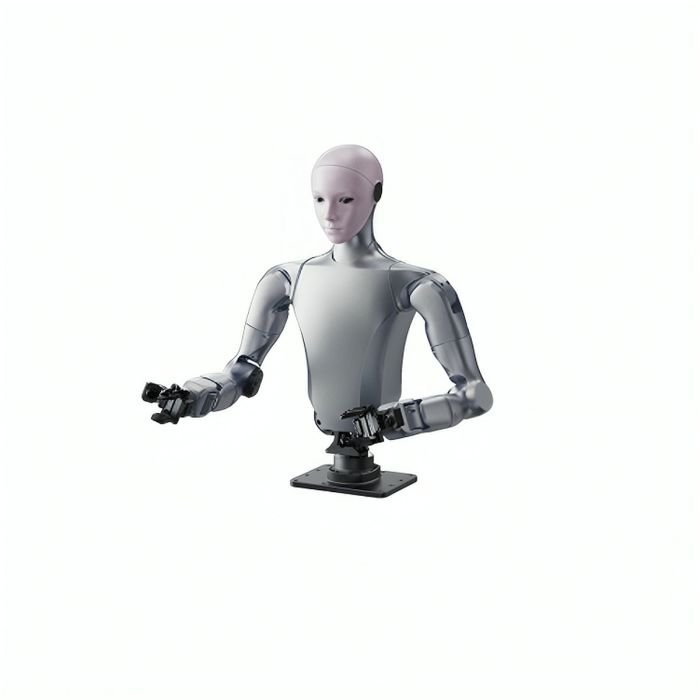
A humanoid robot earns its place by what it does once the stage lights go off. The Unitree H2-A Standard H Humanoid Robot is built around that test. It stands 180 cm tall by design, moves with 31 degrees of freedom and carries a bionic head with facial features. For a team in the islands weighing a first humanoid, the questions that matter are how it moves, what it senses and how far you can take its software.
The product is available through this page, by quotation.
Background
The H2 family and its two versions
The Unitree H2-A Standard H belongs to the H2 family from UNITREE ROBOTICS. The sources name two versions: the H2 and the H2 EDU. Both share the same body, with the same dimensions, joint counts, torque figures, battery and accessories. What separates them is computing and software access. The H2 EDU adds a second computer and is the version marked for secondary development, while the H2 is not.
That split is common in humanoid robotics. One version is for running the platform as supplied, and the other is for teams that want to write their own software on top of it. Reading the specification with this in mind will save you a misunderstanding later.
Key technology: motion, sensing and structure
The motion control is the core of the H2. Unitree describes algorithms that give the form life, with 31 degrees of freedom, 360N.m joint torque and precise replication of dynamic movement. The algorithms continue to evolve through OTA updates, so the robot is not frozen at the capability it had on delivery day.
The joints are distributed the way a human body suggests. Each leg has 6 degrees of freedom and each arm has 7. The waist has 3 and the head has 2. The head is a bionic head with facial features, which matters wherever people will stand and talk to the robot rather than simply watch it.
For perception, the robot carries a humanoid binocular camera with a wide field of view. For interaction it has an array microphone and a high-power speaker. WiFi 6 and Bluetooth 5.2 are included. The structure combines aircraft-grade aluminum, titanium alloy and high-strength engineering plastics, a blend that suits a machine of this height.
Technical Specifications
| Specification | H2 | H2 EDU |
|---|---|---|
| Dimensions standing (H x W x D) | 1820 x 456 x 218mm | 1820 x 456 x 218mm |
| Weight (with battery) | About 70kg | About 70kg |
| Total degrees of freedom | 31 | 31 |
| Degrees of freedom per leg | 6 | 6 |
| Degrees of freedom per arm | 7 | 7 |
| Waist degrees of freedom | 3 | 3 |
| Head degrees of freedom | 2 | 2 |
| Bionic head with facial features | Yes | Yes |
| Maximum torque of leg joint | 360N.m | 360N.m |
| Maximum torque of arm joint | 120N.m | 120N.m |
| Arm maximum payload | Peak: ~15 kg; Rated: ~7 kg | Peak: ~15 kg; Rated: ~7 kg |
| Battery capacity | 15Ah (0.972KWh) | 15Ah (0.972KWh) |
| Battery voltage | Maximum 75.6 V | Maximum 75.6 V |
| Battery life | About 3h | About 3h |
| Materials | Aircraft-grade aluminum, titanium alloy, high-strength engineering plastics | Aircraft-grade aluminum, titanium alloy, high-strength engineering plastics |
| Computing | PC1: Intel Core i5 | PC1: Intel Core i5; PC2: Intel Core i7 (custom development) |
| Vision | Humanoid binocular camera, wide field of view | Humanoid binocular camera, wide field of view |
| Voice interaction | Array microphone and high-power speaker | Array microphone and high-power speaker |
| Wireless | WiFi 6, Bluetooth 5.2 | WiFi 6, Bluetooth 5.2 |
| Included accessories | Smart battery (quick release), charger, manual controller | Smart battery (quick release), charger, manual controller |
| High-power compute module option | Up to Jetson AGX Thor (2070 TOPS) | Up to Jetson AGX Thor (2070 TOPS) |
| Secondary development | Not available | Available |
Specifications as published by the manufacturer; confirmed against the datasheet at quotation.
The manufacturer has not published the top speed, the ingress protection rating, the operating temperature, the camera resolution, the charging time, the charger power rating, the packaged dimensions and weight, or the operating system; they are confirmed at quotation.
What makes the H2 different from a typical research humanoid?
The first difference is how much of the body does real work. With 6 degrees of freedom in each leg, 7 in each arm and 3 at the waist, the robot has the freedom to reach, lean and turn rather than only walk. The 360N.m leg joint torque and 120N.m arm joint torque describe a machine meant to carry its own weight with authority. The arms are rated for about 7 kg continuously, with a peak of about 15 kg.
The second is energy. A 15Ah battery of 0.972KWh gives a battery life of about 3h, and the smart battery is a quick-release unit. Teams that run demonstrations or trials through a working day can plan around a battery change instead of a long pause.
The third is the compute path. The base computer is an Intel Core i5, the H2 EDU adds an Intel Core i7, and a high-power compute module is available up to Jetson AGX Thor at 2070 TOPS. That range lets a buyer match the robot to the workload rather than paying for capacity that will sit idle.
What does the H2 EDU add over the H2?
Two things, both about software. The H2 EDU carries a second computer, PC2, an Intel Core i7 labeled for custom development. It is also the version for which secondary development is available. On the H2, secondary development is not available.
If your plan is to run the robot as supplied, the H2 covers the same body, battery and sensing. If your plan is to write your own behaviors, test your own algorithms or build a curriculum around the robot, the EDU is the version to ask about. Tell us which one you need when you request the quotation, so that the quotation names the right one.
Who is the Unitree H2-A Standard H for?
Universities and technical colleges are a natural fit. A humanoid with a documented joint layout and a development-ready version gives students and researchers something they can modify and measure. Research laboratories studying locomotion, manipulation or human-robot interaction will value the torque figures and the camera and microphone array.
Integrators and engineering firms can use it to build demonstrations for clients. The facial features and voice interaction make it suitable for showrooms, exhibitions and visitor centers, which suits tourism and hospitality businesses around the Caribbean. Industrial teams assessing humanoids for tasks designed around human reach can use it as an evaluation platform.
The page covers one lettered version, and other lettered versions are listed separately, such as Unitree H2-A Standard A Humanoid Robot and Unitree H2-A Standard B Humanoid Robot. Compare them against your requirements before you decide, and ask us when a difference is not clear.
What is the Unitree H2-A Standard H used for?
- University research. Studying bipedal locomotion, whole-body control and manipulation on a full-size platform.
- Teaching robotics. Giving engineering students a real humanoid to program, test and understand, especially on the EDU version.
- Human-robot interaction studies. Using the bionic head, array microphone and speaker to explore how people respond to a robot that speaks and shows a face.
- Exhibitions and showrooms. Presenting a humanoid to visitors at trade events, museums and hospitality venues.
- Perception and AI development. Running vision and decision-making software on the binocular camera and the available compute options.
- Operational evaluation. Testing how a human-height machine copes with spaces, tools and tasks built for people.
Pricing and Availability
We do not publish prices on this page. A quotation is the way to proceed, and it is prepared for the version, computing option and accessories that you specify. Delivery, customs and support are arranged with the quotation, so you will not have to coordinate them on your own. The Unitree H2-A Standard H Humanoid Robot is available on this page.
Frequently Asked Questions
How tall is the Unitree H2-A Standard H?
The standing dimensions are 1820 x 456 x 218mm, in height, width and depth. The design is described as a 180 cm humanoid.
How many degrees of freedom does it have?
It has 31 in total. Each leg has 6, each arm has 7, the waist has 3 and the head has 2.
How long does the battery last?
Battery life is about 3h from the 15Ah (0.972KWh) battery. The smart battery is a quick-release unit, and a charger is included.
What can the arms carry?
The arm maximum payload is a peak of about 15 kg and a rated load of about 7 kg. Arm joint torque is a maximum of 120N.m.
Can I develop my own software on it?
Secondary development is available on the H2 EDU and not on the H2. The EDU also adds a second computer, an Intel Core i7.
What is included with the robot?
The listed accessories are a smart battery with quick release, a charger and a manual controller. Please confirm the full package at quotation.
Where can I buy the Unitree H2-A Standard H and what does it cost?
You can request it through this page, by quotation. We do not print prices; the quotation is prepared for your version and options, with delivery, customs and support arranged alongside.
Summary
A humanoid is worth buying for what it can do after the demonstration ends. The Unitree H2-A Standard H Humanoid Robot offers 31 degrees of freedom, strong joint torque, a camera and voice system, a quick-release battery of about 3h and a clear route to custom software on the EDU version. The decisions left to you are the version, the computing option and the plan for its use. When you are ready to compare the details and receive a quotation, this page is the starting point.


