Topsky (GAJQRXL-LTZS)
In stock
- BRAND:
- TOPSKY
- PART #:
- GAJQRXL-LTZS
- ORIGIN:
- China
- AVAILABILITY:
- SUBJECT TO AVAILABILITY
- SKU:
- Topsky-GAJQRXL-LTZS
Topsky (GAJQRXL-LTZS)
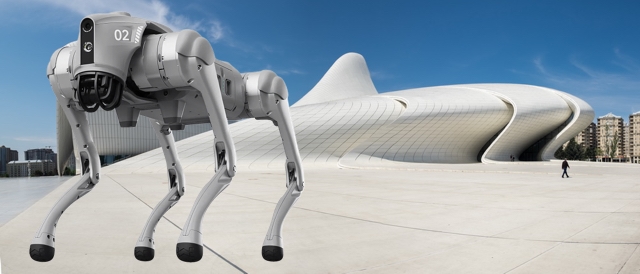
The Topsky (GAJQRXL-LTZS) is a quadruped robot engineered for firefighting support and emergency response work, combining a strong load-carrying legged chassis with an IP67 protection rating and remote operation. With climbing ability of at least a 70% grade, 220 mm obstacle crossing, 500 mm wading depth, and audio-video transmission for remote situational awareness, the GAJQRXL-LTZS is designed to carry out effective tasks in a variety of environments while its operators remain at a safer distance. This page summarises the platform's documented capabilities and explains how to obtain a quotation.
Background
Fire and emergency services worldwide are adopting ground robots to reduce the exposure of personnel to heat, smoke, structural collapse, and hazardous atmospheres. Within that movement, legged platforms occupy a specific niche: they can negotiate rubble, stairs, kerbs, and uneven ground that defeat wheeled and some tracked vehicles. Topsky's GAJQRXL-LTZS applies the quadruped format to one of the most physically demanding fireground jobs — moving charged hose lines and heavy equipment toward the incident.
Why a Quadruped for Fireground Work
A fireground is an unstructured environment by definition: debris, hose lines, kerbs, thresholds, and slopes appear unpredictably, and conditions change as an incident develops. Legged locomotion gives the GAJQRXL-LTZS documented obstacle crossing of at least 220 mm, climbing ability of at least 70% (35 degrees), and wading depth of at least 500 mm, allowing it to keep moving where wheels would stall. The platform's straight-line deviation of no more than 0.5% also matters for hose work, where a predictable path keeps the dragged line clear of pinch points. The stated design goal — flexible and adaptable, able to carry out effective tasks in a variety of environments — reflects exactly this combination of mobility figures.
Load, Traction, and Hose Deployment
The headline capability in the source material is brute useful strength: a machine weighing no more than 150 kg that can carry at least its own weight again (load capacity ≥150 kg) and pull with at least 1500 N of traction force. The specification translates this into a concrete fireground task: dragging two DN80 hoses, fully charged with water, over a distance of at least 80 m. Charged large-diameter hose is heavy and awkward, and advancing it toward a fire is one of the most fatiguing and exposed jobs on an incident ground. Delegating that pull to a remotely operated quadruped both conserves firefighter energy and reduces the number of personnel who must work close to the hazard, while the IP67 rating protects the machine itself against dust and temporary water immersion.
Technical Specifications
| Attribute | Value (as stated in source material) |
|---|---|
| Category | Quadruped robot for firefighting / emergency response |
| Brand / Part number | Topsky / GAJQRXL-LTZS |
| Dimensions | 880 mm x 640 mm x 550 mm |
| Weight | ≤150 kg |
| Load capacity | ≥150 kg |
| Traction force | ≥1500 N |
| Dragging distance | ≥80 m (dragging 2 DN80 full water hoses) |
| Maximum linear speed | ≥1.5 m/s |
| Straight-line deviation | ≤0.5% |
| Climbing ability | ≥70% grade (approx. 35°) |
| Obstacle crossing height | ≥220 mm |
| Wading depth | ≥500 mm |
| Protection level | IP67 |
| Operation | Remote control with audio and video transmission |
| Expandability | Multiple modules, expansion interface, supports secondary development |
| Origin | China |
These values are taken from the product's published specification text; configurations and module fitments can vary between production batches and orders, so all figures should be confirmed against current manufacturer documentation during the quotation process.
How does the GAJQRXL-LTZS support remote and modular operation?
The platform is operated by remote control with live audio and video transmission, giving the operator situational awareness from the robot's position without standing there in person. This matters most in smoke, around unstable structures, or wherever command wants eyes and payload forward before committing personnel. Beyond the base configuration, the specification describes a modular architecture: the robot is equipped with a variety of modules and provides an expansion interface that supports secondary development. The exact module catalogue and development interfaces available for the current production version should be confirmed during quotation.
Who is the Topsky GAJQRXL-LTZS for?
The GAJQRXL-LTZS is intended for organisations that need heavy pulling and carrying capability on ground too rough or too dangerous for people or wheeled machines. Because this is emergency-response equipment, suitability for any specific operational role depends on the service's professional protocols, a site and doctrine assessment, and the regulatory context in which the brigade operates; the robot is a tool within those frameworks, not a replacement for them.
What is the Topsky GAJQRXL-LTZS used for?
Based on the published specification, principal use cases include:
- Charged hose line deployment — dragging two DN80 fully charged water hoses at least 80 m toward an incident, using its ≥1500 N traction force.
- Heavy equipment transport — carrying tools, cylinders, and response equipment on its back with a load capacity of at least 150 kg.
- Remote reconnaissance with audio-video — advancing into smoke-affected or unstable areas and streaming audio and video back to operators for situational assessment.
- Operations on difficult terrain — traversing rubble, slopes up to about 35 degrees, obstacles up to 220 mm, and water up to 500 mm deep during response work.
- Operations in wet and dusty conditions — working around water spray, flooding, and debris environments under the protection of its IP67 rating.
- Custom mission payloads and secondary development — hosting additional modules through its expansion interface for organisations that develop their own sensing or response capabilities.
Pricing and Availability
Specialised firefighting robotics of this class is configured and quoted to order, and no price is published on this page. Availability is subject to confirmation at the time of order, and final cost depends on the module configuration, quantity, support and training arrangements, and destination country. Purchase details are confirmed through quotation: submit a request describing your organisation, intended operational role, and delivery location, and a specialist will respond with current availability, configuration options, lead time, and commercial terms. Quotation requests carry no obligation and are the correct first step for both single-unit evaluations and fleet procurement programmes.
Frequently Asked Questions
What is the Topsky GAJQRXL-LTZS?
It is a quadruped robot designed for firefighting support and emergency response, rated IP67, with a load capacity of at least 150 kg and traction force of at least 1500 N. It is remotely operated with audio and video transmission and supports modular expansion.
How much can the GAJQRXL-LTZS pull or carry?
The specification states a load capacity of at least 150 kg and a traction force of at least 1500 N, demonstrated by dragging two DN80 fully charged water hoses over a distance of at least 80 m.
What terrain can it handle?
Documented mobility figures include climbing ability of at least a 70% grade (about 35 degrees), obstacle crossing height of at least 220 mm, wading depth of at least 500 mm, and a maximum linear speed of at least 1.5 m/s with straight-line deviation of no more than 0.5%.
Is the robot protected against water and dust?
Yes. The platform carries an IP67 protection level, indicating dust-tight construction and protection against temporary water immersion — relevant for fireground conditions involving spray, flooding, and debris.
Can the GAJQRXL-LTZS be customised?
Yes. The specification describes multiple modules, an expansion interface, and support for secondary development, allowing mission-specific payloads and custom software integration. The current module catalogue should be confirmed during quotation.
Does the robot replace firefighters?
No. It is a support tool intended to take on physically demanding and exposed tasks such as hose dragging and load carriage. Its role in any operation depends on the fire service's professional protocols, site assessment, and the applicable regulatory context, and no operational safety outcomes are guaranteed by the equipment alone.
Where can I buy the Topsky GAJQRXL-LTZS and what does it cost?
Purchase details are handled through a quotation process. No price is published here because cost depends on configuration, modules, quantity, and destination. Submit a request for quotation and a specialist will confirm current pricing, availability, and delivery arrangements.
Summary
The Topsky GAJQRXL-LTZS brings quadruped mobility to the heaviest routine job on the fireground: moving charged hose and heavy equipment across broken, wet, obstructed terrain. Its specification is unusually concrete for the category — at least 150 kg of load capacity, 1500 N of traction, an 80 m two-hose DN80 drag, 35-degree climbing, 220 mm obstacle crossing, 500 mm wading, and IP67 protection — and its remote operation with audio-video transmission keeps operators out of the most exposed positions. An expansion interface and secondary development support let services adapt the platform to their own doctrine. Configuration and purchase details are confirmed through quotation, and for any brigade or response organisation evaluating this machine, this page is the starting point.
Specifications
| PART # | GAJQRXL-LTZS |
|---|---|
| BRAND | TOPSKY |