
SIASUN SR25A-35/1.80 (SR25A-35/1.80)
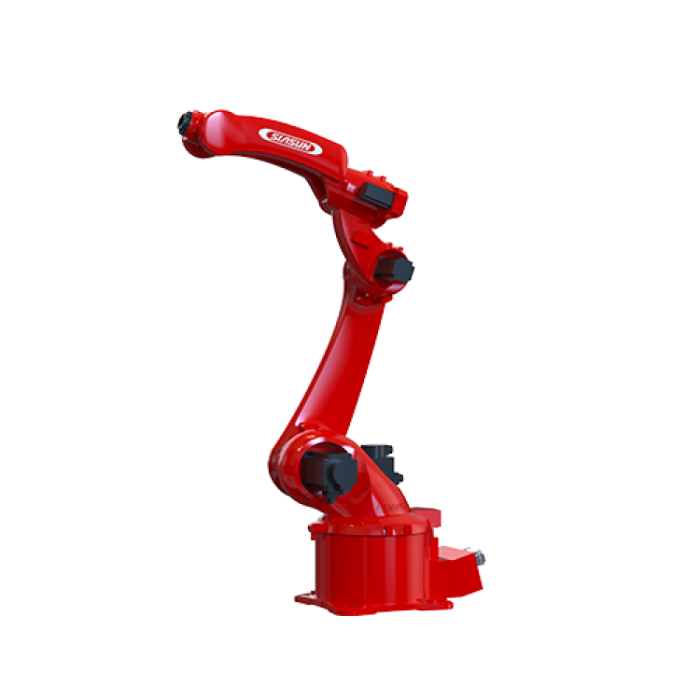
In stock
- BRAND:
- SIASUN
- MODEL:
- SR25A-35/1.80
- PART #:
- SR25A-35/1.80
- ORIGIN:
- China
- Warranty:
- 12 MONTHS
- AVAILABILITY:
- SUBJECT TO AVAILABILITY
- SKU:
- SIASUN-SR25A-35-1-80
SIASUN SR25A-35/1.80 (SR25A-35/1.80)
Most robot specifications describe the robot alone, yet a production cell is judged by everything around it: the cables, the wire, the tooling and the room to move them all. The SIASUN SR25A-35/1.80 (SR25A-35/1.80) is designed with that crowded space in mind, giving its arm and wrist hollow passages so that the services travel inside the machine instead of swinging around it.
The SIASUN SR25A-35/1.80 is available through this page, by quotation.
Background
SIASUN and the SR25A family
SIASUN markets a broad catalog of industrial robots, from compact machines for light work to very large units for heavy loads. Within that catalog the SR25A line sits in the small payload group, and this page covers the SR25A-35/1.80 version. Sister versions in the same line are the SIASUN SR25A-12/2.01 (SR25A-12/2.01) and the SIASUN SR25A-25/1.80 (SR25A-25/1.80). The model code itself is a useful guide: each version carries its own payload and reach designation, and each keeps its own figures.
SIASUN describes the SR25A-35/1.80 as an upgraded iteration of its 20 kg-class product that expands the scope of application fields. In plain terms, it takes a design that already worked in the smaller class and extends it to jobs that call for more capacity and a longer arm. You can browse related machines in the Small Payload group or across all SIASUN Industrial Robots.
Key technology: hollow construction and automotive casting
Three design choices define this robot. First, the J4 to J6 axes follow a hollow concept, which prevents interference and makes the layout of cables and equipment easier to arrange. Second, the arm itself is hollow, with internal cable routing, which minimizes interference while improving structural stiffness and safety. Third, the body is made of aluminum alloy using specialized casting techniques taken from the automotive industry, which gives the robot a lightweight body construction.
Two further details matter in daily use. The wire feeder is integrated, which improves both wire feeding stability and operational efficiency. And every joint has a zero-position calibration groove, so a technician can align the joint precisely to zero with a dedicated tool. An upgraded power system completes the picture, built for high precision, speed and stability during intense production cycles.
Technical Specifications
| Specification | Value |
|---|---|
| Model | SR25A-35/1.80 |
| Payload | 35 kg (77.2 lbs) |
| Reach | 1803mm |
| Repeatability | ±0.05mm |
| Protection (wrist) | IP65 |
| J5/J6 motion range | ±180° |
Specifications as published by the manufacturer; confirmed against the datasheet at quotation.
The manufacturer has not published the weight, the power supply, the controller, the axis speeds, the wrist moment and inertia, the operating temperature, the package contents or the footprint dimensions; they are confirmed at quotation.
What makes the SR25A-35/1.80 different from a conventional arm?
A conventional arm often carries its hoses and cables on the outside. They loop around the wrist, catch on fixtures and wear where they bend. The SR25A-35/1.80 takes another route. The hollow arm carries its cabling internally, and the hollow J4 to J6 axes continue that logic through the wrist, where interference is usually worst. The practical result is a cell that is easier to lay out and a robot whose movements are less likely to be constrained by its own services.
The wrist is also generous in its motion. The J5 and J6 axes each offer a range of ±180°, which means greater applicability. A wider wrist range gives the programmer more ways to approach a part, and more freedom to choose an orientation that keeps the tool clear of fixtures.
Finally, the integrated wire feeder removes one more item from the outside of the arm. With the feeder part of the robot rather than a separate attachment, the wire path is shorter and more stable, which supports wire feeding stability and operational efficiency.
How does it compare with the smaller versions in the family?
The model code tells most of the story. The SR25A-35/1.80 pairs a 35 kg (77.2 lbs) payload with an 1803mm reach. If your workpieces and tooling are lighter, you may want to look at the SR25A-25/1.80, and if you need a different balance of load and reach, the SR25A-12/2.01 is the other version in the line. We do not quote their figures here, because every version keeps its own; request a quotation and the datasheets for each can be compared side by side.
Who is the SIASUN SR25A-35/1.80 for?
The first group is integrators who build cells where cable management decides whether a layout works. Hollow axes and internal routing give them more room and fewer collisions between the robot and its own services. The second group is production engineers who are moving up from a smaller robot. Because this model is an upgraded iteration of the 20 kg-class product, it suits those who want to keep a familiar design while taking on heavier tools or workpieces.
A third group is plants that want a robot with an IP65-rated wrist for working near dust or splashes, and a fourth is shops that value repeatability of ±0.05mm. If your loads are lighter, the SR25A-25/1.80 may fit better, and if your work needs a different reach, the SR25A-12/2.01 deserves a look. Buyers across the Caribbean, where plants are often compact and service access matters, will find the tidy, enclosed cabling a practical advantage.
What is the SIASUN SR25A-35/1.80 used for?
- Arc welding cells. The integrated wire feeder and enclosed cabling suit welding work where wire stability matters.
- Material handling. A 35 kg (77.2 lbs) payload and long reach move parts between stations.
- Machine tending. The wide J5 and J6 wrist range helps the tool reach into fixtures and machines.
- Assembly. Repeatability of ±0.05mm supports tasks that call for consistent positioning.
- Work in dusty or wet areas. The IP65 wrist protection is meant for harsher surroundings than a clean room.
- Upgrading existing lines. Plants running smaller robots can step up to higher capacity without changing their way of working.
Pricing and Availability
We do not print prices on this page. Quotation is the way to buy: tell us your application, and we prepare an offer for the SIASUN SR25A-35/1.80. Delivery, customs and support are arranged together with the quotation, so you see the full picture before you decide. The SIASUN SR25A-35/1.80 is available on this page.
Frequently Asked Questions
What payload and reach does the SR25A-35/1.80 have?
The payload is 35 kg (77.2 lbs) and the reach is 1803mm. These figures belong to this version only.
How accurate is it?
The repeatability is ±0.05mm for this version.
What protection rating does it have?
The wrist is protected to IP65.
Why are the wrist axes hollow?
The J4 to J6 axes follow a hollow concept that prevents interference and makes layout easier. Cables can pass inside instead of around the wrist.
Is a wire feeder included?
The wire feeder is integrated, which improves wire feeding stability and operational efficiency. Which feeder components ship with an order is confirmed at quotation.
How is the zero position set?
Each joint has a zero-position calibration groove. With a dedicated tool, the user aligns the joint precisely to zero.
Where can I buy the SR25A-35/1.80 and what does it cost?
You can buy it through this page by requesting a quotation. We give no price here; the offer is prepared for your project, with delivery, customs and support arranged alongside it.
Summary
The SIASUN SR25A-35/1.80 answers a practical question: how do you give a robot more capacity without crowding the cell around it? Its answer is to move the clutter inside. Hollow wrist axes, a hollow arm with internal cabling and an integrated wire feeder keep services out of the way, while a 35 kg (77.2 lbs) payload, 1803mm reach, ±0.05mm repeatability and an IP65 wrist cover the working basics. Whether you are an integrator or a plant moving up from a smaller robot, this page is the starting point.


