
SIASUN GCR16-2000-EX (GCR16-2000-EX)
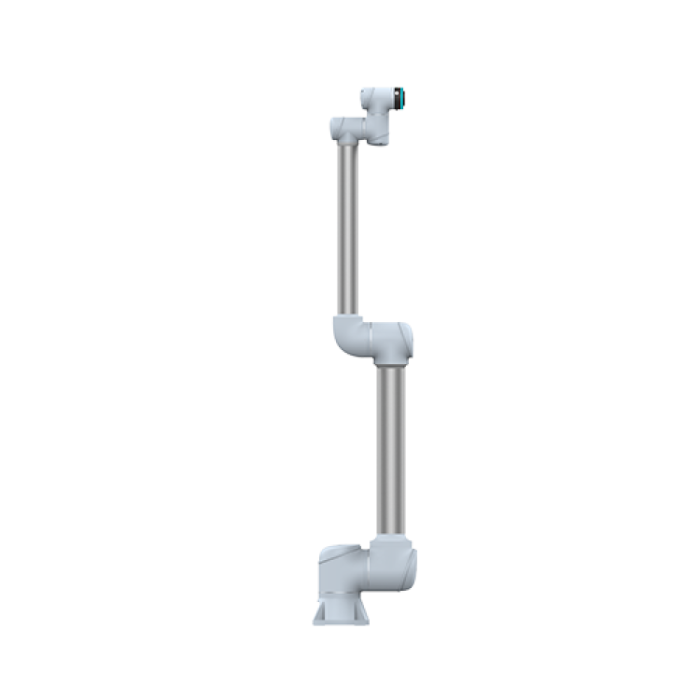
In stock
- BRAND:
- SIASUN
- MODEL:
- GCR16-2000-EX
- PART #:
- GCR16-2000-EX
- ORIGIN:
- China
- Warranty:
- 12 MONTHS
- AVAILABILITY:
- SUBJECT TO AVAILABILITY
- SKU:
- SIASUN-GCR16-2000-EX
SIASUN GCR16-2000-EX (GCR16-2000-EX)
Some jobs are too dangerous for a person and too fiddly for a fixed machine. Put a worker beside a solvent store or a gas compressor and the air itself becomes the risk. The SIASUN GCR16-2000-EX is built for that gap: a six-axis collaborative arm from the explosion-proof series, with a 16kg payload and 2000mm reach, meant to do the picking, welding and inspecting that people would otherwise do in the hazard zone.
The SIASUN GCR16-2000-EX is available through this page, by quotation.
Background
SIASUN and the explosion-proof series
SIASUN is the brand behind this robot, and the GCR16-2000-EX belongs to a family of explosion-proof collaborative robots. The series comprises four models with payloads of 10 to 25 kg and arm reach of 1300 to 2000 mm. Within it, this model sits at the long-reach end: its 2000mm reach matches the top of the series range.
The series idea is simple. Take the traits that made collaborative robots popular, namely safety, ease of operation, fast deployment and low power consumption, and carry them into places where ordinary equipment cannot go. These characteristics are retained in the explosion-proof series. The robot is positioned as a protective barrier for frontline workers in high-risk settings.
Positioning and key technology
The target environments are named plainly: flammable, explosive, toxic, harmful, high-temperature and high-pressure surroundings, as are common in the petroleum, natural gas and chemical industries. In these settings the robot replaces human operators rather than working next to them all day.
Several technologies support that role. The series offers 16 TÜV-certified safety features for human-machine collaboration. It integrates 2D/3D vision depth fusion together with highly sensitive force detection and control. On the software side there are scenario-specific software packages, support for multiple external interfaces, cloud-based robot data monitoring and OTA remote updates. Programming is by drag-and-drop teaching, which lowers the threshold for use and makes operation easier.
Technical Specifications
| Specification | GCR16-2000-EX |
|---|---|
| Maximum payload | 16kg |
| Reach | 2000mm |
| Repeatability | ±0.05 mm |
| Maximum TCP speed | 3.5 m/s |
| IP rating | IP54/IP65 |
| Degrees of freedom | 6 |
| TÜV-certified safety features | 16 |
Specifications as published by the manufacturer; confirmed against the datasheet at quotation.
The manufacturer has not published the robot weight, the rated supply voltage, the power consumption, the explosion-proof certification rating, the joint ranges and speeds, the controller model, the package contents, the operating temperature range, the mounting orientation, the noise level or the communication interfaces; they are confirmed at quotation.
What makes the GCR16-2000-EX different from a standard cobot?
A standard collaborative arm is designed around the person standing next to it. This one is designed around the atmosphere it works in. The series is explosion-proof, and the target industries are petroleum, natural gas and chemicals, where flammable and toxic conditions are part of daily life. That changes who the robot is for, even though the arm itself keeps the familiar cobot habits: simple teaching, quick deployment and modest power use.
The second difference is intelligence at the tool. Vision that fuses 2D and 3D depth information, together with sensitive force detection and control, lets the arm do more than repeat a taught path. Tasks such as picking, assembly, screw fastening and polishing depend on seeing where a part is and feeling how it meets the work.
The third difference is the envelope. A 16kg payload and 2000mm reach give the arm room to serve a larger cell, a deeper skid or a taller fixture than a small cobot could. Load capacity and working radius are the advantages that make the series adaptable to a broader range of applications.
How does the GCR16-2000-EX compare with other models in the series?
The series spans payloads from 10 to 25 kg and reach from 1300 to 2000 mm, so the right choice depends on the part and the distance. If your parts are lighter and the work cell is compact, the SIASUN GCR10-1300-EX is the sibling to review. If you need to move heavier loads, look at the SIASUN GCR20-1400-EX or the SIASUN GCR25-1800-EX. Each page carries its own figures, and none of them are carried over to this model here.
The GCR16-2000-EX is the one to consider when reach is the deciding factor. At 2000mm it reaches the furthest in the series, with a 16kg payload that suits many handling and processing jobs.
Who is the SIASUN GCR16-2000-EX for?
Plant operators in oil, gas and chemical facilities are the first group. They have tasks that must be done inside classified or hazardous zones and would prefer that fewer people enter them. Moving the repetitive part of the job to a robot removes exposure without stopping production.
System integrators are the second. A six-axis arm with drag-and-drop teaching, multiple external interfaces and scenario-specific software packages gives them a base for building cells for welding, assembly, inspection or material handling in difficult sites. Maintenance and engineering teams are the third. They benefit from cloud-based data monitoring and OTA remote updates, which reduce trips to the hazard area.
Buyers with light parts or a tight footprint may be better served by the smaller sibling, the GCR10-1300-EX. You can also browse the wider Robot Arms and Industrial Robots categories to compare options.
What is the SIASUN GCR16-2000-EX used for?
- Intelligent picking. Vision-guided handling of parts in areas where people should not linger.
- Welding. Repeatable seam work in hazardous or high-temperature surroundings.
- Loading and unloading. Moving workpieces in and out of equipment within the 16kg payload.
- Assembly and screw fastening. Force-sensitive joining and fastening tasks that benefit from controlled contact.
- Polishing and grinding. Surface finishing where force detection helps keep contact consistent.
- Quality inspection, gluing and oiling. Checking parts and applying adhesives or lubricants in a controlled, repeatable way.
Pricing and Availability
We do not publish prices on this page. Please request a quotation. Delivery, customs and support are arranged with the quotation. The SIASUN GCR16-2000-EX is available on this page.
Frequently Asked Questions
What payload and reach does the GCR16-2000-EX have?
The maximum payload is 16kg and the reach is 2000mm.
How precise is it?
Repeatability is ±0.05 mm, and the maximum TCP speed is 3.5 m/s.
Is it suitable for hazardous areas?
It belongs to an explosion-proof series intended for flammable, explosive, toxic, harmful, high-temperature and high-pressure environments. The explosion-proof certification rating itself is given with the quotation.
What is its IP rating?
The IP rating for this model is IP54/IP65.
How is it programmed?
It uses drag-and-drop teach programming, which lowers the threshold for use and makes operation easier. Scenario-specific software packages are also available.
What safety features does it offer?
The series provides 16 TÜV-certified safety features for human-machine collaboration. Vision and force sensing support safe, controlled interaction.
Where can I buy the SIASUN GCR16-2000-EX and what does it cost?
You can request it through this page, by quotation. The price is given in the quotation, together with delivery, customs and support arrangements.
Summary
The GCR16-2000-EX answers a specific problem: work that must be done where the air itself is dangerous. It keeps the easy teaching and quick deployment of a cobot, adds explosion-proof series credentials and TÜV-certified safety features, and offers a 16kg payload with 2000mm reach and ±0.05 mm repeatability. If this arm fits your hazardous-area task, this page is the starting point.


