
SEER Robotics SJV-SW600 (SJV-SW600)
In stock
- BRAND:
- SEER ROBOTICS
- MODEL:
- SJV-SW600
- PART #:
- SJV-SW600
- ORIGIN:
- China
- Warranty:
- 12 MONTHS
- AVAILABILITY:
- SUBJECT TO AVAILABILITY
- SKU:
- SEER-Robotics-SJV-SW600
SEER Robotics SJV-SW600 (SJV-SW600)
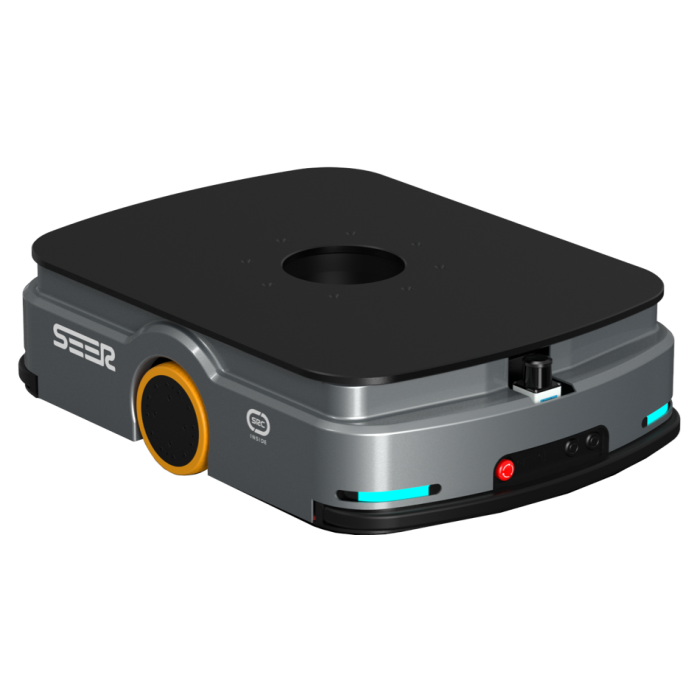
Most warehouse robots ask the building to change for them. The SEER Robotics SJV-SW600 (SJV-SW600) asks the opposite question: how much can a machine only 250 mm tall slip under, lift and carry before anyone notices it is there? It is a Laser SLAM Rotary Lifting Robot with a rated load of 600 kg, built for sites where aisles are narrow and shelving is packed tight.
The SEER Robotics SJV-SW600 (SJV-SW600) is available through this page, by quotation.
Background
SEER Robotics and its platform approach
SEER Robotics (06106.HK) describes itself as a platform-based embodied intelligent robotics company built around the Robot Brain. It serves more than 2,500 customers worldwide with intelligent robotics solutions. That scale matters to a buyer in the Caribbean, because it means the SJV-SW600 is one product in a broad family that shares a common control approach rather than a one-off design.
The same manufacturer builds other mobile robots for lifting and stacking work, and you can browse them in the Lifting Robots category. Within that range, the SJV-SW600 is the rotary lifting model, designed to turn a load rather than only carry it from one point to another.
What sets the SJV-SW600 apart technically
The central idea is the spin function. The robot body and the lifting plate can rotate separately. The chassis can turn to follow a path while the goods on the plate stay oriented the way the operator needs them, or the plate can turn the load while the body holds its heading. In tight spaces such as narrow aisles and densely packed shelves, that independence is what keeps the robot moving instead of stopping to maneuver.
An integrated SRC controller makes this possible. It synchronously controls both the robot's steering and the rotation of the lifted goods, so the two motions stay coordinated.
Safety sensing is split across two lasers. A navigation laser sits at the front and an obstacle avoidance laser sits at the rear, giving two lidars in total. The robot supports several navigation methods: SLAM, QR code and laser reflector. A site can therefore start with the approach that suits its layout and keep the option to use another.
Technical Specifications
| Specification | Value |
|---|---|
| Product name | Laser SLAM Rotary Lifting Robot |
| Navigation type | Laser SLAM |
| Supported navigation methods | SLAM, QR code, laser reflector |
| Dimensions (L x W x H) | 950 x 650 x 250 mm |
| Rotation diameter | 1015 mm |
| Weight (with battery) | 170 kg |
| Rated load | 600 kg |
| Chassis ground clearance | 25 mm |
| Lifting platform dimensions | 924 x 650 mm |
| Maximum lifting stroke | 60±2 mm |
| Minimum aisle width | 790 mm |
| Navigation position accuracy | ±5 mm |
| Navigation angle accuracy | ±0.5° |
| Maximum running speed | 1.5 m/s fully loaded; 2 m/s unloaded |
| Battery | 48 V / 24 Ah (lithium iron phosphate) |
| Comprehensive battery life | 8 h |
| Charging time (10% to 80%) | ≤2 h |
| Charging method | Manual / Automatic |
| Lidar number | 2 |
| Ambient temperature and humidity | TEMP: 0°C to 50°C / RH: 10% to 90%, no compression, no condensation |
| Standard safety and indicator hardware | E-stop button, speaker, ambient lamp, bumper strip |
Specifications as published by the manufacturer; confirmed against the datasheet at quotation.
The manufacturer has not published the IP rating, the controller model, the communication interfaces, the package contents, the noise level or the safety certifications; they are confirmed at quotation.
What makes the SJV-SW600 different from a conventional lifting AGV?
A conventional lifting vehicle usually turns the whole machine, and the load turns with it. In a wide aisle that is acceptable. In a narrow one, it forces the operator to leave extra room or accept a poor pick-up angle. The SJV-SW600 separates the two motions, so the body and the plate can rotate independently.
The footprint helps too. At 950 x 650 mm and only 250 mm high, the robot is compact, and its rotation diameter of 1015 mm tells a planner exactly how much floor it sweeps when it turns. The minimum aisle width of 790 mm is the figure to put against your own racking drawings.
Precision is the other difference. Navigation position accuracy is ±5 mm and angle accuracy is ±0.5°, which matters when a load must be set down square to a shelf or a station. Meanwhile the lifting stroke is 60±2 mm. This is a lift-and-carry machine for loads resting on stands or carts, not a robot that raises pallets to rack height, and it is best judged on that basis.
How does the SJV-SW600 keep working through a full shift?
The battery is a 48 V / 24 Ah lithium iron phosphate pack, and the comprehensive battery life is 8 h. Charging from 10% to 80% takes up to 2 h, and the charging method is manual or automatic. A site can start with manual charging and move to automatic docking later, or run automatic charging from the first day.
Speed is stated for both conditions: 1.5 m/s when fully loaded and 2 m/s when unloaded. Standard hardware includes an E-stop button, speaker, ambient lamp and bumper strip, so people nearby can see and hear the robot and can stop it quickly.
The operating environment is a standard indoor one: 0°C to 50°C and relative humidity of 10% to 90%, with no compression and no condensation. Sites that are hot and humid should check the condensation condition against their conditions when requesting a quotation.
Who is the SJV-SW600 for?
Warehouse operators with narrow aisles are the first group. If a larger vehicle cannot turn in your racking, a low robot with a 790 mm minimum aisle width deserves a close look. Manufacturers moving carts, trays or shelf units between stations are the second group, especially where the load must arrive facing a particular direction.
Third are integrators and project teams who need a platform that accepts SLAM, QR code or laser reflector navigation, depending on the building. Fourth are facilities teams planning a gradual rollout, who can begin with manual charging and add automatic charging when traffic grows.
If your loads need to be raised to rack height, or you need a heavier machine, look at the wider Lifting Robots range instead. The SJV-SW600 is a 600 kg rated, 60 mm stroke robot, and it is at its best when that matches the job.
What is the SJV-SW600 used for?
- Shelf and cart transfer: the robot slips under a loaded unit, lifts it and delivers it to the next station.
- Narrow-aisle logistics: independent body and plate rotation lets it work between densely packed shelves.
- Load orientation at stations: the plate turns the goods so they arrive facing the way the workstation needs.
- Line-side material supply: repeatable, accurate stops support regular deliveries to production lines.
- Mixed-navigation sites: SLAM, QR code and laser reflector methods suit buildings with different layouts.
- Full-shift operation: 8 h of battery life and charging that can be automatic support continuous duty.
Pricing and Availability
Pricing is provided by quotation, tailored to your site and requirements. Delivery, customs and support are arranged together with the quotation, so you receive one coordinated answer rather than separate pieces. The SEER Robotics SJV-SW600 (SJV-SW600) is available on this page.
Frequently Asked Questions
How much can the SJV-SW600 carry?
The rated load is 600 kg. The maximum lifting stroke is 60±2 mm, and the lifting platform measures 924 x 650 mm.
What is the narrowest aisle it can use?
The minimum aisle width is 790 mm. The rotation diameter is 1015 mm, which is the figure to check where the robot will turn.
How does it navigate?
The navigation type is Laser SLAM, and the robot supports SLAM, QR code and laser reflector methods. A navigation laser at the front and an obstacle avoidance laser at the rear provide two lidars in total.
How accurate is it?
Navigation position accuracy is ±5 mm and navigation angle accuracy is ±0.5°.
How long does the battery last and how is it charged?
The comprehensive battery life is 8 h. Charging from 10% to 80% takes up to 2 h, either manually or automatically.
Does this page list an IP rating or safety certifications?
No. Those details, along with the noise level and communication interfaces, are not listed on this page. Ask for them when you request your quotation.
Where can I buy the SJV-SW600 and what does it cost?
The SEER Robotics SJV-SW600 is available through this page, by quotation. The cost depends on your project, so please request a quotation and we will respond with details, including delivery and support.
Summary
The SJV-SW600 is a robot that stays low and out of the way while it does heavy work: 250 mm tall, a 600 kg rated load and a body that turns independently of its lifting plate. For sites with tight aisles and dense shelving, that combination, together with ±5 mm positioning, an 8 h battery and several navigation methods, makes it a practical tool. If it matches your layout, this page is the starting point.


