
SEER Robotics AMB-300 (AMB-300)
In stock
- BRAND:
- SEER ROBOTICS
- MODEL:
- AMB-300
- PART #:
- AMB-300
- ORIGIN:
- China
- Warranty:
- 12 MONTHS
- AVAILABILITY:
- SUBJECT TO AVAILABILITY
- SKU:
- SEER-Robotics-AMB-300
SEER Robotics AMB-300 (AMB-300)
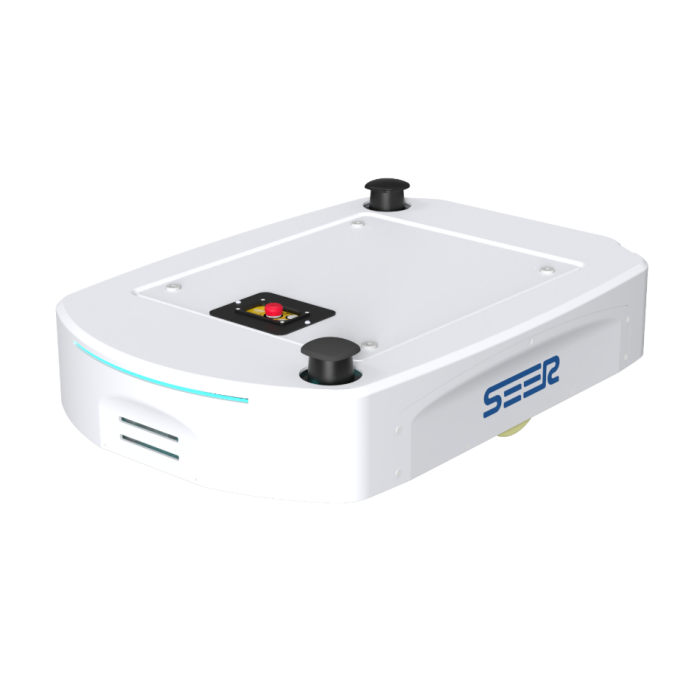
Most robots arrive with a purpose already welded on. The SEER Robotics AMB-300 (AMB-300) arrives without one, and that is the point: it is a laser SLAM robot chassis, a low and sturdy moving base that leaves the upper structure to you. Put a lifting mechanism on it, a roller top, a robotic arm or a pan-tilt head, and the same base becomes a different machine. For integrators, workshop owners and logistics teams around the Caribbean who want one dependable platform instead of several single-job vehicles, that flexibility is worth a closer look.
The SEER Robotics AMB-300 (AMB-300) is available through this page, by quotation.
Background
SEER Robotics and its lineage
SEER Robotics is listed in Hong Kong under the code 06106.HK and describes itself as a platform-based embodied intelligent robotics company built around the Robot Brain. The company serves more than 2,500 customers worldwide with intelligent robotics solutions. It was established in 2015 and is headquartered in Shanghai, China, and it works in the fields of intelligent manufacturing and smart logistics.
That background matters for a buyer. A chassis is only as useful as the software that drives it, and SEER builds its mobile robots around its own control platform rather than borrowing one. The AMB-300 is the model code AMB-CSW03-SR, and it sits in a family that also includes the AMB-CSW015-SR, sold as the SEER Robotics AMB-150, and the SEER Robotics AMB-300XS.
Positioning and key technology
The AMB-300 is a base robot. It navigates by laser SLAM, which means it builds and follows a map of its surroundings using its lidar scanners instead of relying on tape, magnets or reflectors laid into the floor. It carries two lidar units, and the navigation laser scans at a height of 215 mm.
Its second defining feature is the universal chassis mounting. Four mounting holes are set above the chassis, giving a rich set of interfaces for upper structures such as lifting mechanisms, rollers, robotic arms, latent traction and pan-tilt systems. Wi-Fi roaming, automatic charging and shelf recognition are standard functions, so the base is ready for multi-robot sites and for self-service charging from the start.
Technical Specifications
| Specification | Value |
|---|---|
| Product name | Laser SLAM Robot Chassis |
| Product model | AMB-CSW03-SR |
| Navigation type | Laser SLAM |
| Lidar number | 2 |
| Dimensions (L x W x H) | 1000 x 700 x 200 mm |
| Rotation diameter | 1040 mm |
| Weight (with battery) | 144 kg |
| Rated load | 300 kg |
| Chassis ground clearance | 25 mm |
| Navigation laser scanning height | 215 mm |
| Minimum aisle width | 840 mm |
| Navigation position accuracy | ±5 mm |
| Navigation angle accuracy | ±0.5° |
| Driving speed | ≤1.4 m/s |
| Battery specifications | 48 V / 40 Ah (lithium iron phosphate) |
| Comprehensive battery life | 12 h |
| Charging time (10% to 80%) | ≤1.5 h |
| Charging method | Manual / Automatic / Fast battery swap |
| Ambient temperature and humidity range | TEMP: 0°C to 50°C / RH: 10% to 90%, no compression, no condensation |
| Standard functions | Wi-Fi roaming, automatic charging, shelf recognition |
Specifications as published by the manufacturer; confirmed against the datasheet at quotation.
The manufacturer has not published the IP rating, the in-the-box contents, the climbing or slope capability, the communication interfaces, the wheel type and drive motors, or the noise level; they are confirmed at quotation.
What makes the AMB-300 different from a fixed-purpose robot?
A fixed-purpose robot answers one question: it moves a shelf, or a pallet, or a tote. The AMB-300 answers a broader one, which is how to get a precise, repeatable moving base under whatever you need to move or do. Because the upper structure is yours to choose, you are not locked into one handling method, and you can change the application later without replacing the whole vehicle.
The figures show a base built for tight, working spaces. At 1000 x 700 x 200 mm with a rotation diameter of 1040 mm, it needs a minimum aisle width of 840 mm. Its position accuracy is ±5 mm and its angle accuracy is ±0.5°, which matters when an arm must reach a fixture or a lifting mechanism must meet a rack. The chassis ground clearance is 25 mm, so it is a machine for smooth indoor floors rather than rough yards.
Compared with its siblings, the AMB-300 is the model with the 300 kg rated load stated on this sheet. If your project needs a different size or load class, the AMB-150 and the AMB-300XS are the first pages to compare, and we can set the versions side by side when we quote.
How does the AMB-300 keep working through a shift?
Power is the quiet constraint on any mobile robot. The AMB-300 runs on a 48 V / 40 Ah lithium iron phosphate battery, and the comprehensive battery life is 12 h. Charging from 10% to 80% takes 1.5 h or less.
Just as useful is the choice of charging method: manual, automatic or fast battery swap. Automatic charging is a standard function, so the robot can top itself up between tasks, while a fast battery swap suits sites that cannot afford to park a vehicle for long. Wi-Fi roaming is also standard, which helps the robot stay connected as it moves across a site covered by several access points. At up to 1.4 m/s, it moves briskly, and the 144 kg weight with battery is a useful figure when you plan floor loading and handling during installation.
Who is the AMB-300 for?
The first group is system integrators. They need a proven, navigation-ready base on which to build their own robot, and the four mounting holes and the SLAM navigation save them from developing both from scratch. The second group is manufacturers and workshops that want to automate a particular transfer, such as carrying parts between stations, and prefer to fit the top module that suits their process.
Warehouse and logistics operators form the third group. Shelf recognition and a 300 kg rated load make the base a candidate for carrying goods in aisles of 840 mm or wider. Research teams and training institutions are the fourth: a documented chassis with an open mounting pattern is a good platform for developing arms, sensors or pan-tilt payloads.
If your plan is mainly about lifting loads, take a look at our Lifting Robots category as well, and the AMB-300JZ page. Tell us your load, aisle widths and floor conditions, and we will point you to the version that fits.
What is the AMB-300 used for?
- Lifting platforms. Mount a lifting mechanism on the chassis to raise and lower loads at stations and racks.
- Roller transfer. Fit a roller top to pass boxes or totes to and from conveyors.
- Robotic arm carrier. Carry an arm from machine to machine, so one arm serves several workstations.
- Latent traction. Add a latent traction unit to tow carts through a site along mapped routes.
- Pan-tilt inspection. Mount a pan-tilt system for camera or sensor rounds along a set path.
- Shelf and goods handling. Use shelf recognition to support goods movement in warehouse aisles.
Pricing and Availability
No prices are listed on this page. The call to action is a quotation: tell us your application, the upper structure you plan to mount and your site conditions, and we prepare an offer for the AMB-300. Delivery, customs and support are arranged together with the quotation, so you deal with one process rather than several. The SEER Robotics AMB-300 (AMB-300) is available on this page.
Frequently Asked Questions
What navigation does the AMB-300 use?
It uses laser SLAM navigation with two lidar units. The navigation laser scans at a height of 215 mm, and the position accuracy is ±5 mm.
How much can the AMB-300 carry?
The rated load is 300 kg. The robot itself weighs 144 kg with its battery.
How long does the battery last, and how is it charged?
The comprehensive battery life is 12 h, and charging from 10% to 80% takes 1.5 h or less. You can charge manually, automatically or use a fast battery swap.
What can be mounted on the chassis?
Four mounting holes above the chassis accept upper structures such as lifting mechanisms, rollers, robotic arms, latent traction and pan-tilt systems.
What aisle width does it need?
The minimum aisle width is 840 mm, and the rotation diameter is 1040 mm. The chassis measures 1000 x 700 x 200 mm.
What is the operating environment?
The ambient temperature range is 0°C to 50°C, with relative humidity of 10% to 90%, no compression and no condensation.
Where can I buy the AMB-300 and what does it cost?
You can request it through this page, by quotation. We do not list prices here; the offer is prepared once we know your application, and it covers delivery, customs and support.
Summary
The AMB-300 is a robot that deliberately arrives unfinished. Its strengths are the ones a good foundation needs: laser SLAM navigation with ±5 mm position accuracy, a 300 kg rated load, a 12 h battery life, flexible charging, and four mounting holes that let you build the machine your site actually needs. Add a quotation tailored to your site, and you have a clear basis for planning. When you are ready to turn a chassis into a working robot, this page is the starting point.


