
Rotunbot RT-G Spherical Amphibious Patrol Robot
In stock
- BRAND:
- ROTUNBOT
- MODEL:
- RT-G
- ORIGIN:
- China
- Warranty:
- 12 MONTHS
- AVAILABILITY:
- SUBJECT TO AVAILABILITY
- SKU:
- Rotunbot-RT-G
Rotunbot RT-G Spherical Amphibious Patrol Robot
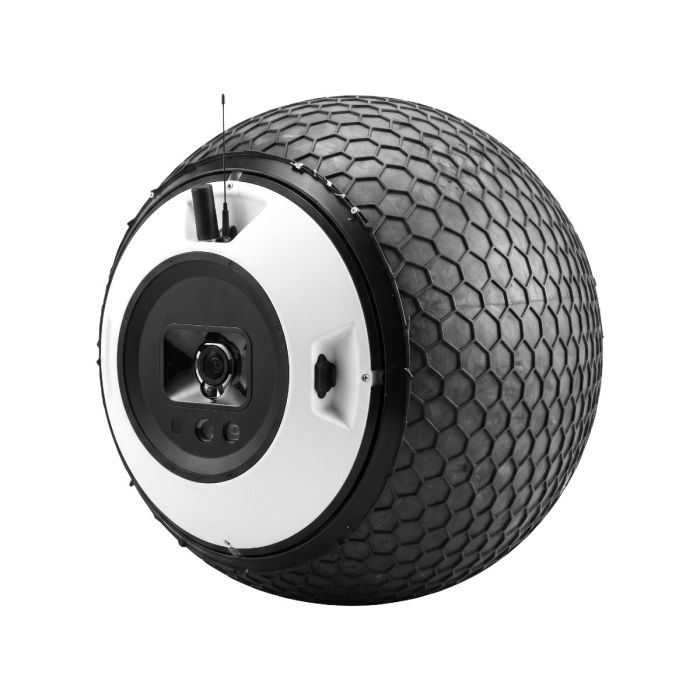
Most patrol robots are built around wheels or tracks, and wheels are exactly what mud, slush and water take away. The Rotunbot RT-G Spherical Amphibious Patrol Robot takes a different route: the whole outer shell is the wheel. It rolls, it balances itself with a moving internal mass, and it is designed to keep going where a conventional ground robot could be restricted. For security teams, coastal operators and anyone who patrols ground that is not tidy pavement, that is a design worth a close look.
The product is available through this page, by quotation.
Background
Logon Technology and the RT-G's first public deployment
The RT-G was developed by Logon Technology and sold under the ROTUNBOT brand. It became widely discussed after it was deployed with police patrols in a commercial area of Wenzhou, Zhejiang province, in December 2024. That deployment is the clearest public record of the robot at work, and it shows the kind of setting its makers have in mind: busy, built-up public space where a patrol unit has to share the ground with people.
The trial also gave a useful lesson in how to read a new patrol platform. Autonomy is the headline claim, with target identification and tracking, yet the units in the initial police deployment were operated remotely. For a buyer, that is a practical point. The sensors and the stabilization system are the hardware; how much of the patrol is handled by an operator and how much by the machine is something to settle when you discuss your own use case.
A ball instead of a chassis
The RT-G is a spherical robot. Inside the shell, motors shift an internal mass to control movement and maintain balance, and that shift of weight lets the outer shell itself roll across the ground. The robot also uses gyroscopic self-stabilization to maintain balance and traction. In plain terms, the machine steers by changing where its weight sits, and the gyroscopic system helps it stay upright and keep its grip.
The platform weighs 125 kg and reaches a top speed of 35 km/h. It is designed to handle mud, slush and light off-road terrain, and the design also allows it to operate in water. That combination of rolling form and amphibious operation is the core of its positioning: one platform for ground that changes under it.
Technical Specifications
| Specification | Value |
|---|---|
| Model | Rotunbot RT-G |
| Developer | Logon Technology |
| Weight | 125 kg |
| Top speed | 35 km/h |
| Form and locomotion | Spherical shell that rolls; motors shift an internal mass to control movement and maintain balance |
| Stabilization | Gyroscopic self-stabilization for balance and traction |
| Terrain | Mud, slush and light off-road terrain |
| Amphibious operation | Can operate in water |
| Sensors | GPS, cameras and ultrasonic sensors |
| Non-lethal equipment | Tear gas, smoke bombs, horns, acoustic dispersers and net shooters |
Specifications as published by the manufacturer; confirmed against the datasheet at quotation.
The manufacturer has not published the dimensions, the battery capacity, the battery runtime, the ingress protection rating, the communication range, the payload, the operating temperature range or the contents of the box; they are confirmed at quotation.
What makes the RT-G different from a wheeled patrol robot?
A wheeled or tracked robot has a front, a back, and contact points that can snag, sink or spin. The RT-G has a single rolling shell. Because motors move an internal mass to steer and balance, the outer body is the part that touches the ground, and the gyroscopic self-stabilization works to keep balance and traction as it moves. That is a different answer to the same problem: how to keep a patrol machine moving over ground that is wet, soft or uneven.
Water is the clearest dividing line. The design allows the platform to operate in water, which gives it an advantage in environments where a conventional ground robot could be restricted. Think of waterfront walkways, flooded paths or ground that turns from firm to slush within a few meters. A robot that treats those transitions as part of the route changes how a patrol can be planned.
The sensing package follows the same practical logic. GPS handles positioning, cameras give an operator eyes on the scene, and ultrasonic sensors support obstacle avoidance. Together they serve positioning, environmental awareness, obstacle avoidance and target tracking.
What equipment can the RT-G carry for crowd and security work?
The RT-G is equipped with non-lethal equipment: tear gas, smoke bombs, horns, acoustic dispersers and net shooters. The mix covers two different jobs. Horns and acoustic dispersers are tools for making a presence known and moving people along from a distance. Smoke bombs, tear gas and net shooters are for situations where a patrol needs more than a warning.
Any buyer should treat this list as a point for discussion with their own legal and operational advisers. Rules on the use of such equipment differ from one jurisdiction to another, and how it is configured and used is something to agree with us when you request a quotation. Do not assume the combination of items from the list alone.
Who is the Rotunbot RT-G for?
The RT-G suits organizations that patrol mixed ground and want a machine that is not stopped by a puddle. Police and public security teams are the clearest segment, since the robot's public record comes from a police patrol in a commercial area. Private security operators responsible for large commercial sites, ports, marinas or waterfront developments may find the amphibious capability and rolling shell a good match for their perimeters.
Research groups and robotics programs are another group. A spherical, self-balancing, amphibious platform with GPS, cameras and ultrasonic sensors is a useful machine for studying how robots behave outside the lab. Emergency and civil protection planners may also want to evaluate it for areas where mud, slush or shallow water slow people and vehicles.
It is less suited to buyers who need every parameter in hand before they begin. A buyer whose plan depends on battery runtime, communication range or payload should raise them at the start of the quotation. The RT-G is currently the only version named in the sources, so there is no sibling to steer toward.
What is the Rotunbot RT-G used for?
- Police and public-area patrol: the robot was deployed with police patrols in a commercial area of Wenzhou in December 2024.
- Waterfront and shoreline monitoring: the amphibious design lets it operate in water where a conventional ground robot could be restricted.
- Off-road and muddy ground: it is designed to handle mud, slush and light off-road terrain.
- Positioning and tracking: GPS, cameras and ultrasonic sensors support positioning, obstacle avoidance and target tracking.
- Crowd management at a distance: horns and acoustic dispersers allow a patrol to communicate and disperse people without close contact.
- Non-lethal response: tear gas, smoke bombs and net shooters give a patrol additional options in a confrontation.
Pricing and Availability
We do not print prices on this page. Every RT-G is quoted for the buyer's own use case, and the quotation is where configuration and quantity are settled. Delivery, customs and support are arranged with the quotation. To begin, send a request, and the Rotunbot RT-G Spherical Amphibious Patrol Robot is available on this page.
Frequently Asked Questions
How heavy is the Rotunbot RT-G?
The RT-G weighs 125 kg.
How fast can it travel?
Its top speed is 35 km/h. It is designed to handle mud, slush and light off-road terrain.
Can the RT-G operate in water?
Yes. The design allows the platform to operate in water, which helps in environments where a conventional ground robot could be restricted.
How does it stay balanced?
Motors shift an internal mass to control movement and maintain balance, and gyroscopic self-stabilization helps maintain balance and traction. The outer shell itself rolls across the ground.
Is the RT-G autonomous?
Autonomous target identification and tracking is the pitch, but the units in the initial police deployment were operated remotely. Ask us about the control setup that fits your project.
What sensors and equipment does it carry?
The sensing package includes GPS, cameras and ultrasonic sensors. The non-lethal equipment includes tear gas, smoke bombs, horns, acoustic dispersers and net shooters.
Where can I buy the Rotunbot RT-G and what does it cost?
The RT-G is available through this page, by quotation. We do not list a price here; send a request and the quotation will cover the details, including delivery, customs and support.
Summary
The RT-G answers a simple question: what if the robot had no wheels to lose? A rolling shell, an internal mass that steers and balances, gyroscopic self-stabilization and amphibious operation give it a way across ground that stops other machines. GPS, cameras and ultrasonic sensors, together with a set of non-lethal equipment, make it a patrol platform rather than a curiosity. If your routes run over mud, slush or water, this page is the starting point.


