
Lumos Robotics LUS2 Full Size Humanoid Robot
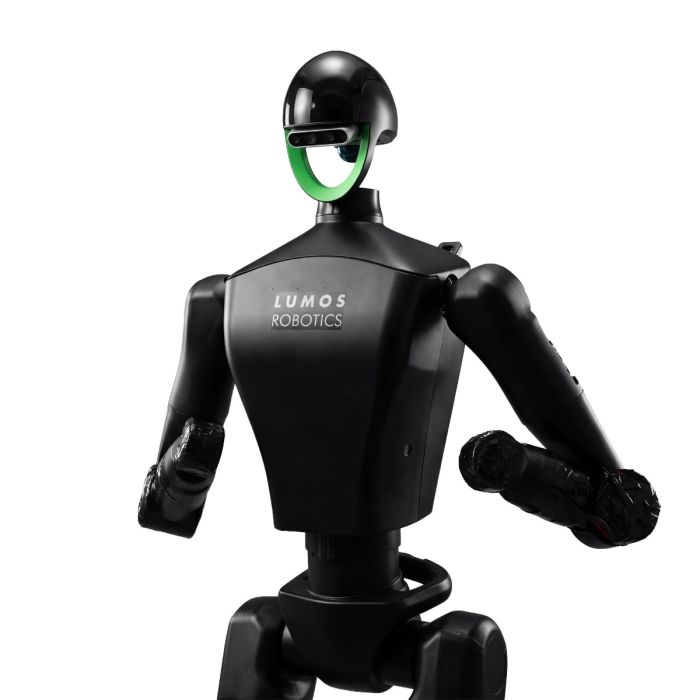
In stock
- BRAND:
- LUMOS ROBOTICS
- PART #:
- LUS2
- ORIGIN:
- China
- AVAILABILITY:
- SUBJECT TO AVAILABILITY
- SKU:
- Lumos-Robotics-LUS2
Lumos Robotics LUS2 Full Size Humanoid Robot
Most humanoid robots are admired for how they walk. The Lumos Robotics LUS2 Full Size Humanoid Robot is just as notable for what happens after a fall: it stands back up in just 1 second. For a lab, a classroom or a demonstration floor, that means less time waiting and more time working.
The product is available through this page, by quotation.
Background
Lumos Robotics and the LUS2 line
Lumos Robotics is the brand behind the LUS2, and it offers humanoid platforms for people who build, teach and test robots. The LUS2 is described by its manufacturer as a full-size humanoid robot, purpose-built for research, education and commercial applications. A second platform from the same brand, the Lumos Robotics MOS Dual Arm Humanoid Robot (MOS), takes a different approach to the same field, and buyers comparing the two will find it a useful reference point.
Humanoid robots of this class sit at the meeting point of mechanical engineering, embedded computing and artificial intelligence. Universities use them to study balance and manipulation. Training centers use them to show students what a modern robot looks like up close. Companies use them to test whether a human-shaped machine can work in spaces designed for people. The LUS2 is built to serve all three groups with one platform.
Positioning and key technology
The LUS2 combines an aluminum alloy body with 28 degrees of freedom across its joint modules. Each arm has 7 degrees of freedom and each leg has 6. Its maximum joint torque is 360 N·m, which gives the legs and arms real authority when the robot moves, lifts or recovers from the ground.
On the computing side, the robot carries an NVIDIA Jetson AGX Orin rated at 275 TOPS. For perception it uses a 3D LiDAR together with a binocular depth camera. The manufacturer also states that secondary development is supported, so teams can load their own software and build on the platform instead of working inside a closed box. You can browse similar machines in the Bipedal Humanoids category or the wider Humanoids category.
Technical Specifications
| Specification | Value |
|---|---|
| Product type | Full-size humanoid robot |
| Height | 160 cm |
| Weight | 57 kg |
| Material | Aluminum alloy |
| Total DoF (joint modules) | 28 |
| Single-arm DoF | 7 |
| Single-leg DoF | 6 |
| Max joint torque | 360 N·m |
| Arm payload | 3 kg |
| Stand-up recovery | 1 second |
| Rated voltage | 54 V |
| Battery capacity | 10 Ah |
| Battery life | 2 h |
| Perception sensors | 3D LiDAR + Binocular Depth Camera |
| Processor | NVIDIA Jetson AGX Orin (275 TOPS) |
| Charger | 54 V / 5 A |
| Handheld remote | Yes |
| Dexterous hand | Configurable |
| Wi-Fi | Yes |
| Secondary development | Supported |
Specifications as published by the manufacturer; confirmed against the datasheet at quotation.
The manufacturer has not published the dimensions, the IP rating, the charging time, the operating temperature, the walking speed, the hand degrees of freedom or the head degrees of freedom; they are confirmed at quotation.
What makes the LUS2 different from other humanoid robots?
The first difference is recovery. A humanoid that falls usually needs a person to help it, or a slow routine to get it back on its feet. The LUS2 stands up in just 1 second. In a research setting, that shortens the time between experiments. In a demonstration, it keeps the audience's attention instead of losing it to a long pause.
The second difference is the balance between strength and size. At 160 cm and 57 kg, the LUS2 is a full-size machine, and its 360 N·m of maximum joint torque is a serious figure for a body that light. The aluminum alloy construction helps keep the mass down while the joint modules carry the load. Each arm has 7 degrees of freedom, so it can reach and orient a hand in ways that a simpler arm cannot, and the arm payload of 3 kg supports fine manipulation tasks.
The third difference is openness. The robot supports secondary development, and it carries a processor in the NVIDIA Jetson AGX Orin class at 275 TOPS. That gives a development team the computing headroom to run perception and control software on the robot itself. A configurable dexterous hand lets the end of the arm be matched to the work, and Wi-Fi connects the robot to the rest of your lab or workshop.
What does the LUS2 offer for perception and power?
The LUS2 senses its surroundings with a 3D LiDAR and a binocular depth camera. The LiDAR gives it a wide view of the space around it, while the depth camera supports closer work such as spotting objects to pick up. Together they give researchers a sound base for navigation and manipulation experiments.
Power comes from a battery rated at 54 V and 10 Ah, which the manufacturer lists with a battery life of 2 h. The matching charger is rated at 54 V / 5 A. A handheld remote is included in the feature list, so an operator can take direct control when needed. Planning a session around the 2 h battery life is straightforward, and teams that run longer days should discuss their routine when they request a quotation.
Who is the LUS2 for?
Research laboratories are the most natural buyers. A full-size body with 28 degrees of freedom, strong joints and an open development path suits teams studying locomotion, whole-body control and manipulation. Universities and technical colleges will find it just as useful for teaching, because students can see a real humanoid move and then write code for it.
Commercial buyers form the third group. Companies exploring humanoids for demonstrations, trade shows, visitor centers or early pilot work can use the LUS2 to test ideas at human scale. Integrators who build custom solutions for clients can treat it as a development platform, then decide what to take further.
If your work centers on two arms at a work surface rather than on walking, compare it with the Lumos Robotics MOS Dual Arm Humanoid Robot (MOS). For the wider range, the Humanoids category is the best place to start.
What is the LUS2 used for?
- Locomotion research: two 6-degree-of-freedom legs and 360 N·m of maximum joint torque give teams a physical platform for balance and gait studies.
- Manipulation experiments: 7-degree-of-freedom arms, a 3 kg payload and a configurable dexterous hand support work on fine handling tasks.
- Perception and navigation: the 3D LiDAR and binocular depth camera let developers test mapping, obstacle awareness and object detection.
- Teaching and training: classrooms and workshops can use a real humanoid to teach robotics, control and AI.
- Software development: with secondary development supported and a 275 TOPS processor on board, teams can run and refine their own code on the robot.
- Demonstrations and pilots: the 1-second stand-up and human-scale body make it a strong draw for exhibitions and early commercial trials.
Pricing and Availability
We do not print prices on this page. Please request a quotation, and we will respond with the details for your project. Delivery, customs and support are arranged together with the quotation, so you know what to expect before you commit. The Lumos Robotics LUS2 Full Size Humanoid Robot is available on this page.
Frequently Asked Questions
How tall is the LUS2 and how much does it weigh?
The LUS2 is 160 cm tall and weighs 57 kg. It has an aluminum alloy body.
How many degrees of freedom does it have?
It has 28 degrees of freedom in total across its joint modules. Each arm has 7 and each leg has 6.
What can the arms carry?
The manufacturer states an arm payload of 3 kg and describes the robot as suited to fine manipulation tasks. The dexterous hand is configurable.
How long does the battery last?
The battery life is 2 h, from a 54 V, 10 Ah battery. The charger is rated at 54 V / 5 A, and the charging time is confirmed at quotation.
What computing and sensors does it use?
It uses an NVIDIA Jetson AGX Orin rated at 275 TOPS, with a 3D LiDAR and a binocular depth camera for perception.
Can I develop my own software for it?
Yes. Secondary development is supported, and the robot has Wi-Fi and a handheld remote.
Where can I buy the LUS2 and what does it cost?
You can buy it through this page, by quotation. The cost is given in the quotation, which also covers delivery, customs and support.
Summary
The LUS2 is a humanoid that does not stay down. It stands up in just 1 second, and it backs that agility with 28 degrees of freedom, 360 N·m of maximum joint torque, a 275 TOPS processor and sensors for seeing its surroundings. Its 160 cm, 57 kg aluminum alloy body gives research teams, educators and commercial developers a human-scale platform they can program themselves. If it fits your project, this page is the starting point.


